
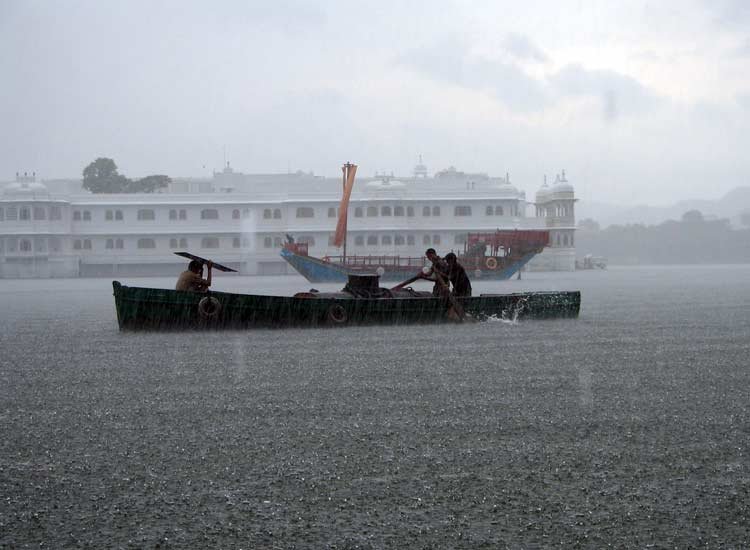
The desert state of India undergoes a breathtaking transformation when the skies finally break open from July to September. The scorching summer heat recedes, giving way to mist-covered hills, overflowing lakes, and ancient fortresses draped in vibrant greenery. If you think this royal state is only about sand dunes and camels, exploring it during the rainy season will completely redefine your travel perspective. Working with a reliable travel agency in Rajasthan allows you to unlock hidden, rain-washed gems across the Aravalli range that remain entirely unseen by conventional winter tourists.
Udaipur: The Romantic Heart of Monsoon
Udaipur rightfully earns its reputation as a premier destination when the rains arrive. As the seasonal downpours replenish the historic water systems, the city’s iconic white marble palaces appear to float on shimmering, expansive waters.
The Aravalli peaks surrounding the city transform into lush green backdrops, providing dramatic views from every street corner. A trip here is incomplete without visiting the Sajjangarh Monsoon Palace, which sits atop a high peak specifically designed to track incoming rain clouds. From this vantage point, you can watch the fog roll over Lake Pichola and Fateh Sagar Lake. The cool, refreshing breeze and the gentle drizzle make exploring the intricate courtyards of the grand City Palace an exceptionally pleasant experience, far removed from the intense heat of the summer months.
Mount Abu: The Misty Desert Oasis
As the only true hill station in the region, Mount Abu offers a unique alpine escape during the rainy season. Perched on a high rocky plateau, this destination becomes an ethereal world of dense fog, sudden waterfalls, and wind-swept viewpoints.
A quiet walk around Nakki Lake reveals mountains shrouded in low-hanging clouds, turning standard nature trails into mystical paths. The famous Dilwara Jain Temples, renowned for their delicate marble carvings, offer a serene retreat from the outdoor showers. Climbing to Guru Shikhar, the highest point in the state, rewards travelers with panoramic views of lush green valleys that feel entirely uncharacteristic of a typical desert state.
Kumbhalgarh: The Great Wall Wrapped in Fog
The massive UNESCO World Heritage site at Kumbhalgarh becomes an absolute visual masterpiece under an overcast sky. The fort features a historic perimeter wall extending over 36 kilometers across the rolling hills, making it one of the longest continuous walls in the world.
During the monsoon months, the surrounding wildlife sanctuary turns into a dense, deep green canopy. Heavy mist clings to the high ramparts of the Badal Mahal, or Palace of Clouds, creating an atmosphere that feels straight out of an ancient epic. Exploring the stone pathways and ancient temples within the fort complex is incredibly rewarding in the cool weather, especially when the valleys below open up to reveal rain-fed streams. Selecting a dedicated Rajasthan holiday tour package ensures you have the proper transportation to navigate these winding, scenic mountain passes safely during the wet season.
Bundi: The Hidden City of Stepwells
For travelers looking to escape the typical tourist crowds, Bundi serves as an exceptional offbeat destination that thrives in the rain. Tucked away in a narrow valley, this small town is famous for its blue-hued houses, grand medieval architecture, and more than 50 historic stepwells.
When the rains pour down, the ancient stone baoris, like the magnificent Raniji ki Baori, collect fresh rainwater, highlighting their detailed architectural carvings. The imposing Taragarh Fort overlooks the town, its weathered stone structures coming alive against the brilliant green growth covering the hillsides. The interior walls of the Bundi Palace house some of the finest traditional murals in the country, which can be viewed comfortably in the peaceful, unhurried environment of the off-season.
Banswara: The Scenic City of a Hundred Islands
Located in the far southern region, Banswara breaks every single stereotype associated with the local landscape. Known popularly as the Cherrapunji of the state, this area receives high amounts of rainfall, turning the entire tribal belt into a tropical paradise.
The mighty Mahi River swells dramatically, creating numerous small, verdant islands across the vast landscape. The sight of the roaring waters at the Mahi Dam and the cascading Singpura Waterfalls offers a spectacular viewing experience for nature lovers. It provides a peaceful, nature-focused retreat that is highly distinct from the architectural tours found in the northern cities. Planning a trip to these pristine southern landscapes is made simple when organizing specialized Rajasthan group tour packages that efficiently manage seasonal itineraries for larger travel parties.
Essential Tips for Rainy Season Travelers
Traveling during this vibrant season requires a tiny bit of practical preparation to ensure a smooth and memorable journey across the region.
- Pack Smart: Bring sturdy, non-slip footwear for exploring slick fort ramparts and wet nature trails, along with light, quick-drying clothing.
- Check Park Schedules: While major monuments and palaces remain open year-round, note that the core zones of major national parks like Ranthambore close temporarily for wildlife breeding seasons.
- Stay Flexible: Hilly terrains near Mount Abu and Kumbhalgarh can experience occasional travel delays due to heavy mist, so keep your daily sightseeing schedules reasonably flexible.