
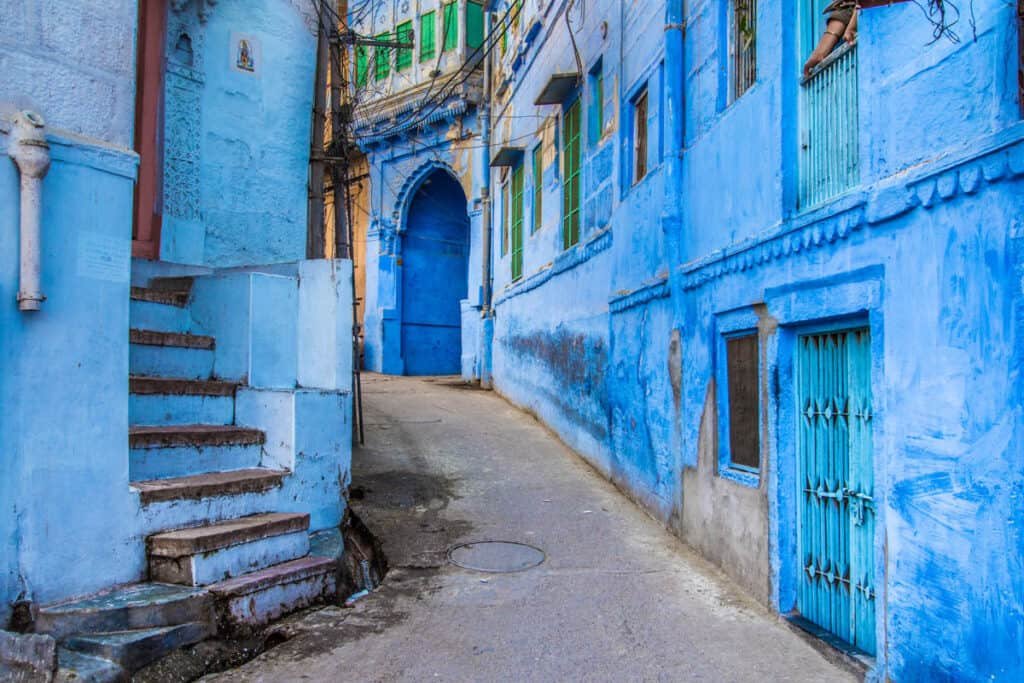
Standing atop the battlements of Mehrangarh Fort, the view below is a sapphire sea of architecture that defines Rajasthan’s “Sun City.” To truly immerse yourself in this azure landscape, securing a reliable taxi service in jodhpur is the first step toward uncovering the history etched into these indigo walls. This blue hue isn’t just a stylistic choice; it is a living chronicle of social hierarchy, environmental adaptation, and spiritual devotion.
The Origins of the Azure Palette
The tradition of painting houses blue was originally a marker of social identity. Historically, members of the Brahmin community used indigo-tinted lime washes to distinguish their homes. Over centuries, this practice evolved from a status symbol into a functional architectural standard. The transition from private identity to a city-wide aesthetic has made Jodhpur one of the most photographed urban landscapes in the world. As you navigate the narrow alleys of the old city, the variation in shades—from pale sky blue to deep cobalt—reveals the age and upkeep of the structures.
Practicality Behind the Pigment
While the visual appeal is undeniable, Jodhpur’s blue heritage is rooted in pragmatism. Located on the edge of the Thar Desert, the city faces scorching temperatures. Residents discovered that the blue-wash reflects heat, keeping the interiors of these stone houses remarkably cool during the summer. Furthermore, the chemical composition of the traditional wash, which often included copper sulfate, acted as an effective deterrent against termites and other pests that thrive in the desert heat. This blend of science and tradition is best explored through a curated jodhpur sightseeing tour, where local guides explain how these ancient cooling methods still outperform modern solutions in the heart of the walled city.
Landmarks of the Blue City
To understand the heritage, one must visit specific vantage points where the blue architecture interacts with Jodhpur’s rugged terrain.
- The Brahmapuri Quarter: This is the epicenter of the blue houses. Walking through these lanes offers an intimate look at the ornate doorways and carved windows that contrast sharply against the blue backdrops.
- Mehrangarh Fort Periphery: The base of the fort provides a dramatic vertical perspective, where the massive brown sandstone walls of the fortress seem to rise directly out of a blue mist of residential rooftops.
- Pachetia Hill: For those seeking a panoramic sunset view, this spot offers a 360-degree look at the city, showing how the blue sprawl stretches toward the horizon.
Beyond the City Walls: Rural Heritage
The blue heritage of Jodhpur is deeply connected to the surrounding rural landscape and the communities that protect the local ecosystem. A short drive from the city center leads to the historic Khejarli Village Jodhpur, a site of immense cultural significance. This village represents the environmental ethos of the Bishnoi community, whose sacrifice to protect the Khejri trees is a cornerstone of Rajasthani identity. Understanding this connection between the urban “blue” and the rural “green” provides a holistic view of how Jodhpur’s people have lived in harmony with their harsh surroundings for generations.
The Modern Evolution of the Blue City
Today, maintaining Jodhpur’s blue heritage is a communal effort. While modern paints are available, many homeowners still prefer the traditional lime-and-indigo mix to preserve the breathability of the stone walls. This commitment to conservation ensures that the city remains a vibrant cultural hub rather than a stagnant museum. Photographers and history enthusiasts flock here not just for the color, but for the stories of the families who have inhabited these blue-washed havens for centuries.
Navigating the Indigo Maze
The old city of Jodhpur was designed long before the advent of modern vehicles, resulting in a labyrinth of winding paths and steep inclines. Navigating this area requires local expertise. Professional drivers who understand the flow of the city can help you avoid the most congested routes while ensuring you reach the hidden gems that aren’t found in standard guidebooks. Whether you are looking for the best street food hidden in a blue alley or a specific craft workshop, having local transport allows you to focus on the visual experience without the stress of navigation.
Preserving the Visual Legacy
As Jodhpur grows, the challenge remains to protect the visual integrity of the blue heritage. Local regulations and a sense of civic pride continue to encourage the use of the iconic blue tint. For the traveler, witnessing this heritage is a lesson in how color can define the soul of a city. From the rhythmic sounds of the local markets to the quiet dignity of the blue-washed temples, every corner of Jodhpur offers a frame-worthy moment that speaks of a rich, resilient past.