


The golden city of Jaisalmer is often synonymous with towering forts and vibrant markets, but for those who seek the true spirit of Rajasthan, the real magic lies beyond the city walls. As a premier tour operator in jaisalmer, we have spent years navigating the shifting sands of the Thar Desert, observing how the modern travel industry often prioritizes convenience over authenticity. The rise of “non-touristic” safaris has sparked much debate among travelers. Is it truly possible to find a silent corner in one of the world’s most famous deserts, or is it simply a clever marketing tactic? In this honest review, we strip away the fluff to explore what it means to go off the beaten path and why a deeper connection with the desert is the ultimate luxury for the modern soul.
The Myth of the “Empty” Desert
Most visitors to Jaisalmer are funneled toward Sam Sand Dunes, a place characterized by hundreds of colorful tents, blaring music, and Jeep convoys. While this offers a festive atmosphere, it rarely provides the “desert experience” people dream of. A true non-touristic safari is defined by the absence of permanent structures and artificial noise. To find the real Thar, one must travel further—often 40 to 60 kilometers away from the city—to secluded dunes where the only tracks in the sand belong to beetles and desert foxes. This isn’t just about distance; it is about a commitment to preserving the nomadic lifestyle that has existed here for centuries.
The Raw Beauty of an Overnight Non Touristic Safari Jaisalmer
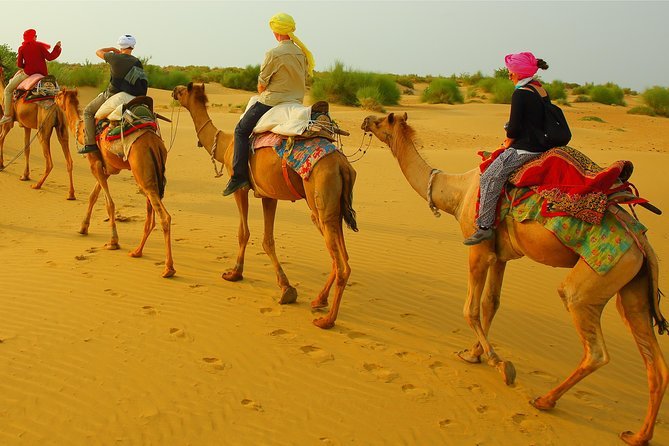
If you are looking for five-star amenities and air-conditioned tents, a raw safari is likely not for you. However, for those who value the stars over a ceiling, an Overnight Non Touristic Safari Jaisalmer offers a perspective that no hotel can replicate. On these journeys, the expertise of your camel handler is your greatest asset. These guides are often locals who have grown up in the desert villages; they know every ridge and shrub by name. The experience begins with a slow-paced camel trek as the afternoon sun loses its bite, leading you into a landscape of pristine, wind-swept ripples. There are no generators here—just the crackle of a small wood fire and the sound of traditional food being prepared by hand.
Setting Expectations: Comfort vs. Connection
One of the most important aspects of E-E-A-T (Experience, Expertise, Authoritativeness, and Trustworthiness) in travel writing is honesty. A non-touristic safari is physically demanding. You will be sitting on a camel for several hours, and your bed will be a simple mattress laid directly on the sand under the open sky. However, the trade-off is unparalleled. Without the light pollution of the camps, the Milky Way becomes so bright it casts a visible shadow. You aren’t just a spectator; you are a guest of the desert. This level of trust between the traveler and the guide is what transforms a simple trip into a lifelong memory.
Beyond the Dunes: A Cultural Deep Dive
While the sand dunes are the visual highlight, the journey through the scrubland is where the expertise of a seasoned guide truly shines. A comprehensive Jaisalmer sightseeing tour usually focuses on the architecture of the Patwon Ki Haveli or the Gadisar Lake, but a desert safari focuses on the living history of the Thar. Along the way, you might pass through abandoned villages or stop at a remote settlement to share tea with a shepherd. These interactions are not staged for social media; they are authentic glimpses into a rugged way of life. Understanding the flora and fauna—such as the Khejri tree, which is the lifeline of the desert—adds a layer of authority to your travel experience that you simply won’t get from a bus window.
Sustainability and Respecting the Thar
As the popularity of Jaisalmer grows, the environmental impact of tourism becomes a critical concern. Trustworthy operators prioritize “Leave No Trace” principles. In non-touristic areas, there are no waste disposal systems, so everything brought in must be carried back out. By choosing a smaller, more intimate safari, you are directly supporting local families rather than large corporate resorts. This micro-economy helps keep the traditional skills of camel breeding and desert navigation alive. It is a symbiotic relationship where the traveler gains a soul-stirring experience, and the local community gains the means to sustain their heritage.
Why Silence is the Ultimate Reward
In a world that is constantly “on,” the silence of the deep Thar is profound. There is a specific moment at dusk, after the sun has dipped below the horizon and before the first stars appear, when the desert becomes utterly still. For many, this is the highlight of the entire trip. It is a time for reflection that is impossible to find in the crowded tourist hubs. Whether you are a solo traveler looking for clarity or a couple seeking a shared adventure, the honesty of the desert is refreshing. There are no mirrors, no notifications, and no pretenses—just the vastness of the horizon and the warmth of a desert fire.
Final Verdict: Is it Worth It?
To conclude this honest review, the non-touristic approach to the Thar Desert is for the traveler who seeks depth over breadth. It requires a bit of grit and a willingness to step out of your comfort zone, but the rewards are a sense of peace and a connection to nature that is increasingly rare. By choosing an operator that understands the nuances of the terrain and respects the local culture, you ensure that your visit contributes positively to this fragile ecosystem. The real Thar isn’t found in a brochure; it is found in the quiet moments between the dunes, under a canopy of infinite stars.


