
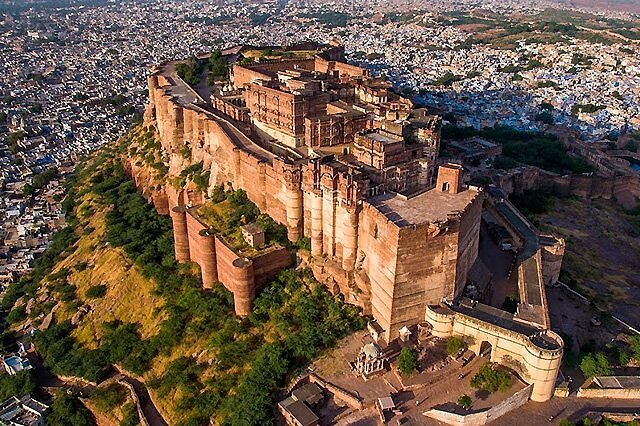
Jodhpur, affectionately known as the Blue City of India, is an enchanting blend of Rajput gallantry, royal architecture, and desert heritage. Perched on the edge of the Thar Desert, the historic city captivates travelers with monumental ramparts, serene white-marble cenotaphs, and vibrant medieval bazars. Planning a concise itinerary allows visitors to witness centuries of royal Marwar history within twenty-four hours. Selecting an experienced travel agency in Rajasthan ensures smooth transfers between monument gates, comfortable travel in air-conditioned vehicles, and verified guidance from regional experts who know the desert terrain intimately.
When you book a well-structured Jodhpur full day tour, you bypass the logistical complexities of navigating local traffic, ensuring ample time to discover every landmark at an unhurried pace.
Mehrangarh Fort: The Majestic Citadel of Marwar
Dominating the city skyline from a sheer perpendicular cliff 400 feet above the plains, Mehrangarh Fort stands as one of the largest and best-preserved fortresses in India. Founded in 1459 by Rao Jodha, the founder of Jodhpur, this massive stronghold retains scars of past battles along its seven formidable gates.
Stepping through the imposing gates brings visitors into grand royal courtyards and palaces adorned with exquisite sandstone latticework. Highlights include:
- Moti Mahal (Pearl Palace): The administrative hall where rulers held court, featuring wooden ceilings accented with mirrors and gold.
- Phool Mahal (Flower Palace): A lavish chamber commissioned as a private audience room, richly decorated with pure gold leaf and portraits.
- Sheesh Mahal (Hall of Mirrors): Intricate mirror mosaics and painted plaster religious depictions reflecting royal opulence.
- Museum Galleries: Houses priceless treasures including royal palanquins, ivory elephant howdahs, authentic Marwar weaponry, and fine miniature paintings.
The fort ramparts also preserve original cannons, providing breathtaking panoramic vistas across the sea of indigo-painted houses nestled below.
Jaswant Thada: The Marble Marvel of Mewar
Located a short scenic drive down the hill from Mehrangarh, Jaswant Thada serves as the royal crematorium for the Marwar rulers. Built in 1899 by Maharaja Sardar Singh in honor of his father, Maharaja Jaswant Singh II, this ornate mausoleum is often referred to as the Taj Mahal of Marwar.
The main structure is crafted from finely carved sheets of Makrana marble polished so thin that they produce an ethereal golden luminescence when sunlight passes through them. Sculpted pillars, delicate marble gazebos, and multi-tiered lakeside gardens surround the memorial. The tranquil lakeside setting attracts migratory birds, creating a calming contrast to the bustling streets of the inner city.
Umaid Bhawan Palace: Heritage, Luxury, and Royal Life
Commissioned in 1929 by Maharaja Umaid Singh and completed over sixteen years, Umaid Bhawan Palace is among the world’s largest private residences. Built using golden-yellow sandstone cut from the Chittar Hill without the use of mortar, this monument blends Indo-Saracenic grandeur with Art Deco architectural aesthetics.
While a central portion remains the home of the current royal lineage and another operates as a luxury heritage hotel, the palace houses an accessible public museum. Within the galleries, visitors can view vintage Marwar photographs, antique clock collections, fine porcelain, polished royal armory, and an exceptional fleet of classic vintage cars parked in front of the museum garden.
Mandore Gardens: Ancient Capital and Royal Cenotaphs
Situated five miles north of the city center lies Mandore, the ancient capital of the Marwar kingdom prior to the construction of Mehrangarh. Rather than traditional umbrella-shaped chhatris, the cenotaphs here take the architectural shape of towering Hindu temples carved from local red sandstone.
Key highlights across the leafy public grounds include:
- The Cenotaph of Maharaja Ajit Singh: A majestic structure featuring ornate spire carvings and elaborate stone pillars.
- The Hall of Heroes: A rock-cut gallery displaying sixteen brightly painted deities and valiant warrior figures carved directly from stone.
- The Temple of Three Hundred Million Gods: A historic shrine housing intricate artistic iconography dating back to classical Marwar dynasties.
The garden offers a shady retreat filled with peacocks, langur monkeys, and ancient ruins, making it an essential afternoon visit.
Toorji Ka Jhalra and Sardar Market: The Living Pulse of the Old Town
No day spent exploring Jodhpur is complete without experiencing the vibrant public life inside the old fortified settlement. Built in the 1740s by Queen consort Toorji, Toorji Ka Jhalra is a stepped reservoir descending deep into an underground aquifer. The geometrical symmetry of red sandstone stairs, carved dancing elephant water spouts, and submerged niches reflect ancient water-harvesting ingenuity.
From the stepwell, take a brief walk toward Sardar Market, framed by the century-old Ghanta Ghar (Clock Tower). The bazaar offers narrow alleys filled with pure Rajasthani spices like Mathania red chilies, hand-embroidered leather juttis, tie-dye bandhani textiles, and silver tribal jewelry. Before concluding your day, stop by local vendors to taste classic street delicacies, including crisp mawa kachoris and rich saffron-infused lassi.
Exploring these royal sights on an organized schedule guarantees you see the very best of Jodhpur while experiencing authentic Marwar hospitality.