
Located in the Pali district of Rajasthan, roughly 265 kilometers from Gandhinagar, Jawai Bandh offers an extraordinary wildlife getaway that feels worlds away from urban life. Built across the Jawai River, this massive reservoir is surrounded by ancient, wind-sculpted granite hills that provide natural caves and vantage points for one of India’s densest populations of free-roaming leopards. While wildlife enthusiasts visit the region throughout the year, the winter season transforms the landscape into an unmatched haven for open-jeep safaris and migratory birdwatching. For travelers planning an extended overland journey across Gujarat and Rajasthan, starting or concluding your expedition at a luxury hotel in Gandhinagar ensures seamless connectivity and refined comfort before heading into the rugged wilderness.
Why Winter Is the Peak Season in Jawai
From November through February, the intense desert heat gives way to crisp mornings, bright sunny afternoons, and cool evenings. Daytime temperatures hover comfortably between 22°C and 29°C, while early morning temperatures can dip to around 8°C or 10°C. This climate shift fundamentally alters animal behavior across the granite outcrops and scrublands. During warmer months, leopards retreat deep into shaded rock crevices to escape the sun. In winter, however, they spend extended hours basking openly on sun-drenched boulders, making daytime tracking far more predictable and rewarding for photographers and first-time visitors.
Leopard Safaris Across the Granite Hills
Unlike traditional national parks with strict buffer zones and heavy vehicle congestion, Jawai operates as a community-conserved landscape where leopards coexist peacefully alongside the local Rabari pastoralists. Winter safaris typically operate in two primary slots: early sunrise drives starting around 6:00 AM and late afternoon sunset drives beginning around 3:30 PM.
- Morning Drives: Crisp air and golden early light create dramatic conditions as mist lingers over the reservoir and leopards return from nocturnal hunts to warm themselves on high granite ridges. Jawai Nature Stay
- Evening Drives: As shadows lengthen across the hills, leopards emerge from their resting caves, offering clear silhouettes against the glowing sunset sky. Jawai Nature Stay
- Expert Tracking: Experienced local trackers read pugmarks, alarm calls from langurs and peacocks, and subtle terrain cues to navigate the rocky tracks safely in customized 4×4 vehicles. Jawai Safari
Migratory Birdwatching Around the Reservoir
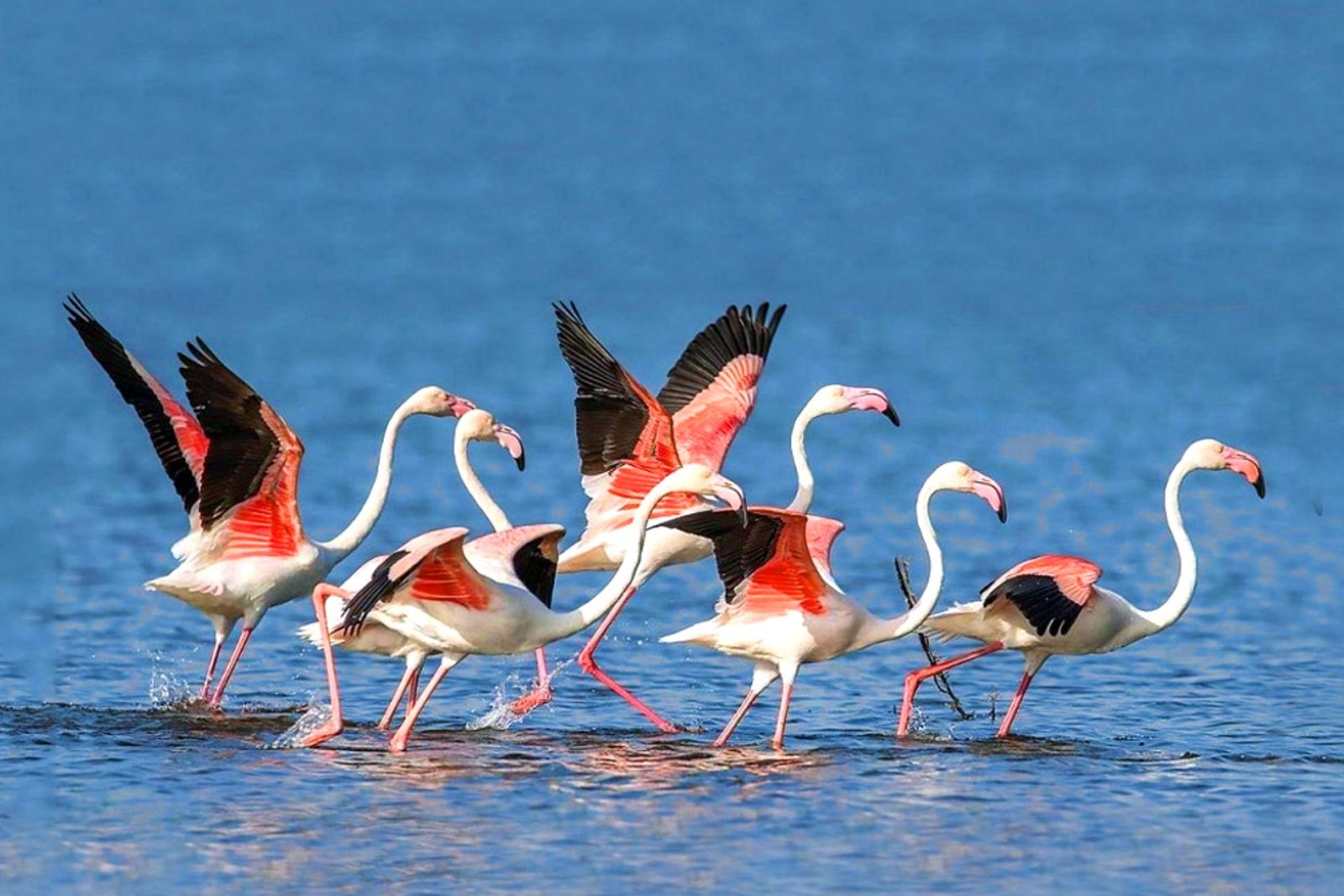
Beyond its famous big cats, Jawai Bandh is a premier wetland habitat that attracts over 150 species of resident and migratory birds every winter. As water levels stabilize after the monsoon, shallow banks and rocky islands turn into bustling feeding grounds for avian travelers arriving from Central Asia and Europe. Dedicated birdwatching excursions usually take place between 10:30 AM and noon, when the morning chill fades and waterfowl become highly active along the shoreline.
- Migratory Waterbirds: Visitors frequently spot flocks of Greater Flamingos, Bar-headed Geese, Demoiselle Cranes, Dalmatian Pelicans, and Northern Pintails wading in the calm waters. Jawai Safari
- Waders and Shorebirds: Painted Storks, Eurasian Spoonbills, Black-winged Stilts, and Great White Egrets patrol the marshy edges alongside basking marsh crocodiles. Jawai Safari
- Raptors: The surrounding cliffs and scrub trees host formidable birds of prey, including the Indian Eagle-Owl, Osprey, Crested Serpent Eagle, and Peregrine Falcon. Jawai Safari
Practical Planning Tips for a Winter Expedition
Preparing properly for Jawai’s diurnal temperature swings ensures maximum comfort during multi-hour drives in open vehicles. Travelers should pack layered clothing, including a windproof fleece or warm jacket for dawn departures that can be shed once the mid-morning sun climbs higher. Earth-toned outfits in olive, beige, or brown help guests blend into the rocky environment without startling wildlife. Carrying a pair of binoculars alongside a telephoto camera lens allows you to observe distant cliff ledges and offshore bird flocks without disturbing their natural routines. Because December and January represent peak travel months, booking private safari slots and accommodations well in advance is essential.
Connecting Your Wildlife Escape with Gandhinagar
A winter trip to Jawai pairs naturally with a broader itinerary in Gujarat, given the straightforward road and rail links connecting Pali district to the Ahmedabad-Gandhinagar corridor. Many travelers use the state capital as a convenient transit hub, gathering with relatives at a family club in Gandhinagar to unwind, share safari photographs, and enjoy recreational facilities after days spent on rugged forest trails. Similarly, corporate teams and photography groups organizing annual winter retreats often coordinate their pre-departure briefings or post-expedition celebrations at a well-equipped event venue in Gandhinagar. Gift City Club serves as an ideal base for these journeys, bridging urban hospitality with unforgettable wildlife adventures.