
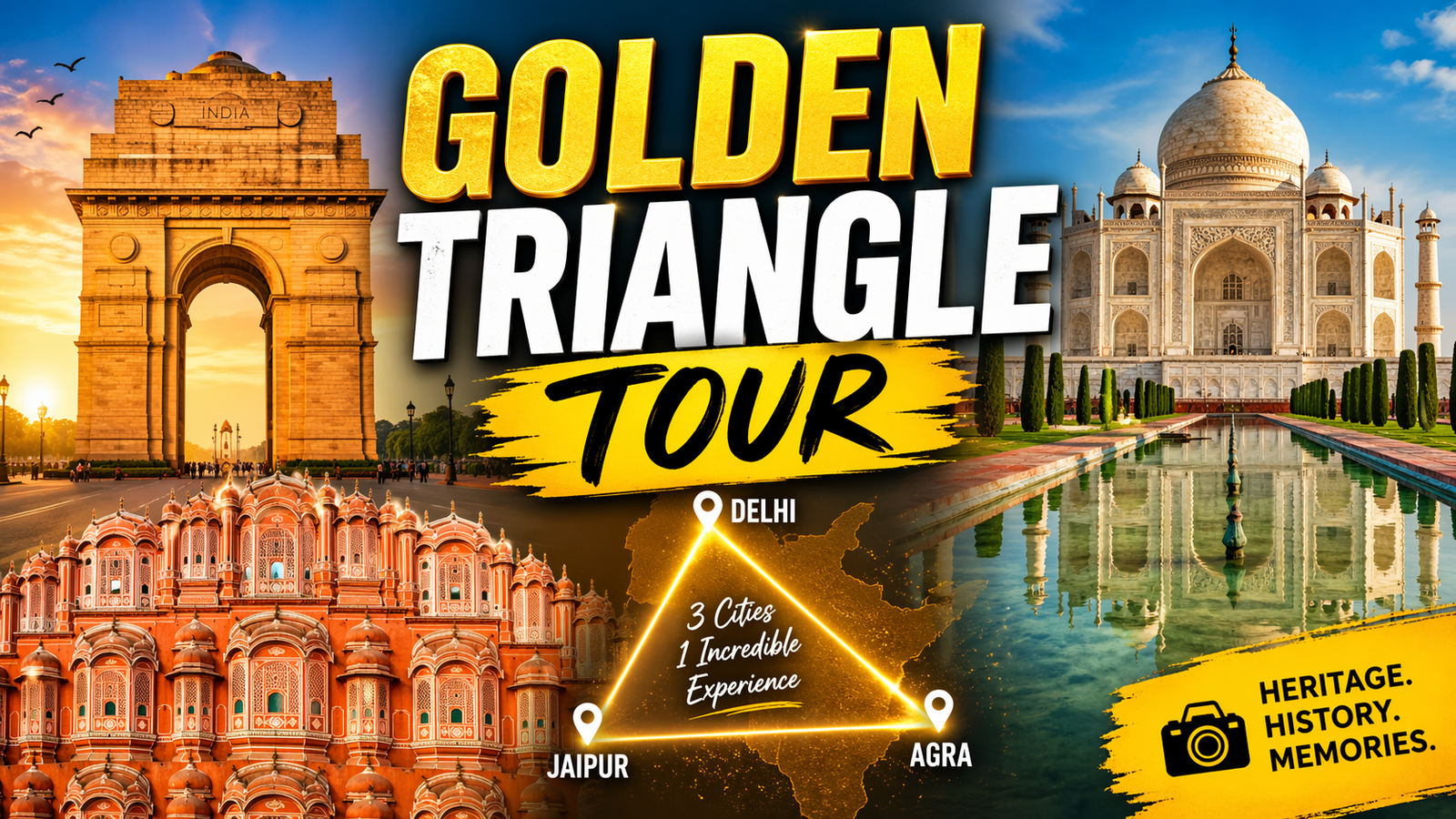
The Golden Triangle is perhaps the most iconic travel circuit in India, offering a concentrated dose of the country’s vast history, diverse culture, and architectural brilliance. Formed by the geographical positions of Delhi, Agra, and Jaipur, this route creates a triangle on the map, with each point representing a unique era of Indian civilization. For first-time visitors and seasoned travelers alike, this journey provides a sensory immersion into a world where ancient legends meet modern vibrancy.
Exploring this circuit allows travelers to witness the evolution of Indian heritage through its monuments, from the red sandstone of the Mughal era to the pink-hued palaces of the Rajputana. Beyond the physical structures, the tour is a gateway to experiencing the soulful traditions, bustling bazaars, and culinary delights that define the heart of North India.
Delhi: A Blend of Two Worlds
The journey typically begins in Delhi, the capital city that serves as a living museum of India’s past and present. Delhi is divided into two distinct parts: Old Delhi and New Delhi. In the narrow lanes of Old Delhi, the air is thick with the scent of spices and the sound of history. The Red Fort stands as a testament to Mughal power, while the Jama Masjid, one of the largest mosques in India, showcases the grandeur of Islamic architecture.
In contrast, New Delhi, designed by the British, features wide boulevards and monumental structures like India Gate and Rashtrapati Bhavan. The city is a melting pot of cultures, where ancient Sufi shrines coexist with contemporary art galleries. Visitors often find that the best way to navigate this complex city is through professionally curated itineraries, such as those offered by Rajasthan Tour Services, which ensure a seamless transition between the chaotic charm of the old city and the structured elegance of the new.
Agra: The Epitome of Mughal Grandeur
From Delhi, the tour moves south to Agra, a city synonymous with the eternal beauty of the Taj Mahal. Built by Emperor Shah Jahan in memory of his beloved wife Mumtaz Mahal, this ivory-white marble mausoleum is a masterpiece of symmetry and delicate craftsmanship. Watching the sun rise over the Taj Mahal is a spiritual experience that remains etched in the memory of every traveler.
However, Agra’s historical significance extends beyond the Taj. The Agra Fort, a massive fortification of red sandstone, housed the Mughal emperors for generations and offers a stunning view of the river Yamuna. A short drive from the city lies Fatehpur Sikri, the abandoned capital of Emperor Akbar. This “ghost city” is remarkably preserved, featuring intricate palaces and the towering Buland Darwaza, illustrating the height of Mughal architectural innovation and urban planning.
Jaipur: The Royal Heart of Rajasthan
The final leg of the triangle leads to Jaipur, the “Pink City” and the capital of Rajasthan. Founded by Maharaja Sawai Jai Singh II, Jaipur is a marvel of 18th-century town planning and Vedic architecture. The city’s distinct pink hue, originally applied to welcome the Prince of Wales in 1876, remains its signature aesthetic.
Jaipur is home to some of the most spectacular forts and palaces in India. The Amber Fort, perched on a hilltop, blends Hindu and Mughal styles with its shimmering Sheesh Mahal and expansive courtyards. Within the city, the Hawa Mahal, or “Palace of Winds,” stands with its unique five-story exterior resembling a honeycomb. The City Palace and the Jantar Mantar observatory further highlight the intellectual and cultural richness of the Rajput era. For those looking to delve deeper into these royal landscapes, choosing golden triangle tour packages in india provides a structured yet flexible way to explore the local traditions, from block-printing workshops to traditional Rajasthani folk performances.
Culinary Traditions and Local Life
One cannot truly experience the history and culture of the Golden Triangle without indulging in its diverse culinary landscape. Each city offers a different flavor profile that reflects its historical influences. In Delhi, the street food culture is unparalleled, with savory chaats and rich Mughlai curries dominating the palate. Agra is famous for its Petha, a sweet made from ash gourd that has been a local staple for centuries.
Jaipur introduces travelers to the fiery and robust flavors of Rajasthan. Dishes like Dal Baati Churma and Laal Maas represent the desert heritage of the land. Beyond the food, the vibrant markets of the Golden Triangle—such as Chandni Chowk in Delhi and Johari Bazaar in Jaipur—are hubs of traditional craftsmanship. Here, travelers can find intricate jewelry, hand-woven textiles, and marble inlay work, all of which have been passed down through generations of artisans.
Preserving Heritage through Sustainable Tourism
As the popularity of the Golden Triangle continues to grow, there is an increasing focus on preserving the integrity of these historical sites. Sustainable tourism practices are essential to ensure that future generations can witness the same majesty that we see today. Local guides and travel experts play a crucial role in educating visitors about the importance of conservation and respectful engagement with local communities.
Rajasthan Tour Services emphasizes this commitment to authentic and responsible travel, helping guests connect deeply with the local culture while supporting the preservation of heritage sites. By choosing organized tours, travelers contribute to the local economy and ensure that the delicate balance between tourism and conservation is maintained.
Conclusion: A Journey Through Time
The Golden Triangle tour is more than just a sightseeing trip; it is a pilgrimage through the soul of India. From the power-filled corridors of Delhi to the romantic silhouettes of Agra and the regal splendor of Jaipur, this circuit encapsulates the essence of a nation that is both ancient and ever-evolving.
Whether you are marveling at the intricate carvings of a 17th-century tomb or navigating the vibrant chaos of a modern Indian market, the journey offers a profound understanding of how history shapes the present. It is a route that promises discovery at every turn, leaving every traveler with a deeper appreciation for the rich tapestry of Indian culture.