
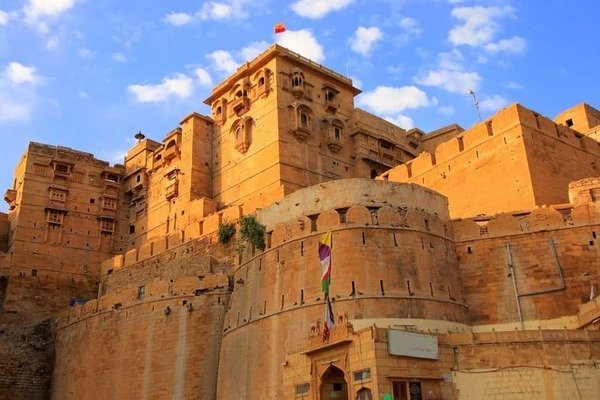
Deep in the heart of the Thar Desert, where the horizon meets an endless expanse of rolling dunes, lies a city that seems to have been sculpted from the very rays of the sun. Jaisalmer, often celebrated as the “Golden City,” is not merely a destination but a living museum of medieval grace and Rajputana bravery. For any traveler seeking to navigate this arid landscape with ease and authenticity, choosing a reputable Jaisalmer tour operator is the first step toward uncovering the layered history and hidden gems of this sandstone citadel.
The title “Golden City” is far from a poetic exaggeration. As the sun traverses the desert sky, the entire city undergoes a breathtaking transformation. The yellow sandstone used in nearly every structure contains a high percentage of iron ore, which reacts to light by emitting a warm, honey-hued glow. This architectural uniformity creates a seamless blend between the man-made environment and the surrounding desert, making the city appear as a mirage rising from the sand.
The Architectural Marvel of Sonar Quila
At the center of Jaisalmer’s golden identity is the Jaisalmer Fort, also known as Sonar Quila or the Golden Fort. Built in 1156 AD by Rawal Jaisal, it is one of the very few “living forts” left in the world. While most forts across India serve as silent monuments of the past, Sonar Quila pulses with modern life. Nearly one-fourth of the old city’s population still resides within its massive ramparts, housing generations of families, bustling markets, and ancient temples.
To truly appreciate the intricate craftsmanship of the region, a dedicated Jaisalmer sightseeing tour is essential. Walking through the narrow, winding lanes of the fort reveals the “Jali” work—exquisite stone lattices that allowed royal women to observe the streets without being seen. These carvings are so delicate they often resemble fine lace rather than solid rock, showcasing the unparalleled skill of the Silavats (stone carvers) who defined the city’s aesthetic for centuries.
The Grandeur of the Merchant Havelis
Beyond the fort walls, the city’s wealth is further immortalized in its grand havelis. These palatial mansions were built by wealthy 19th-century merchants who grew rich from Jaisalmer’s strategic position on the ancient Silk Route. Patwon Ki Haveli, the largest and most ornate of these, is actually a cluster of five small havelis known for their gold-colored balconies and intricate murals.
Other notable structures like Salim Singh Ki Haveli, with its distinctive peacock-shaped roof, and Nathmal Ki Haveli, famous for its symmetrical yet slightly differing halves carved by two brothers, add to the city’s golden silhouette. These homes were designed not just for opulence but for survival, with thick sandstone walls providing a natural cooling system against the scorching desert heat, keeping interiors pleasant even when outdoor temperatures soar.
Seamless Travel Across the Desert Terrain
The geography of Jaisalmer is as challenging as it is beautiful. The city is spread out, with many of its most iconic attractions—such as the Sam Sand Dunes, the abandoned “ghost village” of Kuldhara, and the royal cenotaphs at Bada Bagh—located several kilometers away from the main hub. Relying on a professional Cab service in Jaisalmer ensures that you can move between these sites comfortably, avoiding the fatigue of the desert sun and ensuring you arrive at the dunes just in time for the famous golden sunset.
Local drivers often double as storytellers, sharing legends of the Bhatti Rajputs and the tragic folklore of the Paliwal Brahmins who once inhabited the region. Having reliable transport allows visitors to explore the Thar Desert National Park or visit the serene Gadisar Lake at dawn, when the reflection of the golden shrines in the water creates a symmetrical masterpiece of light and shadow.
Cultural Vibrancy and Living Traditions
The “Golden” tag also refers to the richness of the local culture. Jaisalmer is a bastion of Rajasthani folk music and dance. The Manganiyar and Langha communities have kept traditional melodies alive for centuries, their voices echoing through the desert nights during campfires and festivals. The annual Desert Festival transforms the city into a kaleidoscope of color, featuring camel races, turban-tying competitions, and the famous “Mr. Desert” contest.
The culinary landscape is equally rich, featuring desert staples like Ker Sangri, Gatte ki Sabzi, and the sweet, dense Ghotua Laddoo. Shopping in the local bazaars offers a chance to take a piece of the Golden City home, with camel leather goods, silver jewelry, and embroidered textiles serving as vibrant reminders of a trip back in time.
Why Jaisalmer Remains Timeless
Jaisalmer remains the Golden City not just because of its stones, but because of its spirit. It is a place where the past isn’t tucked away in a textbook; it is walked upon, lived in, and celebrated daily. The harmony between the golden sands and the golden architecture creates a sense of permanence in an ever-changing world. Whether you are gazing at the fort from a rooftop cafe or riding a camel across the dunes, the city leaves an indelible mark of warmth and wonder on every traveler’s soul.