
Rajasthan is a land where history breathes through the sandstone walls of its forts and the vibrant colors of its crowded bazaars. For many travelers, the journey begins in the “Pink City,” a place that balances chaotic energy with regal poise. Planning a trip here can feel overwhelming due to the sheer volume of sights, but working with a reliable tour operator in rajasthan ensures that your logistics are handled, allowing you to focus entirely on the cultural immersion. This three-day guide is designed to help you navigate Jaipur without the typical travel fatigue, blending iconic landmarks with hidden gems.
Day 1: The Grandeur of Amer and the Royal Legacy
Your first day should be dedicated to the architectural marvels that define the Rajput era. Start early to beat the crowds at the Amer Fort, located about 11 kilometers from the city center. This UNESCO World Heritage site is a labyrinth of courtyards, private chambers, and the breathtaking Sheesh Mahal (Mirror Palace). The intricate inlay work and the panoramic views of Maota Lake provide a profound introduction to the scale of Rajasthani ambition.
As you head back toward the city, a stop at Jal Mahal is essential. While the palace itself is not open to the public, the sight of the low-rise symmetrical structure floating in the middle of Man Sagar Lake is a photographer’s dream. After a traditional Rajasthani lunch consisting of Dal Baati Churma, spend your afternoon at the City Palace. This living museum is still home to the royal family and houses an impressive collection of textiles, weapons, and art. Adjacent to the palace is the Jantar Mantar, an astronomical observatory featuring the world’s largest stone sundial. Understanding how ancient scholars tracked celestial bodies with such precision is a highlight of any Rajasthan Heritage Tour that emphasizes the intellectual history of the region.
Day 2: Immersive City Exploration and Local Life
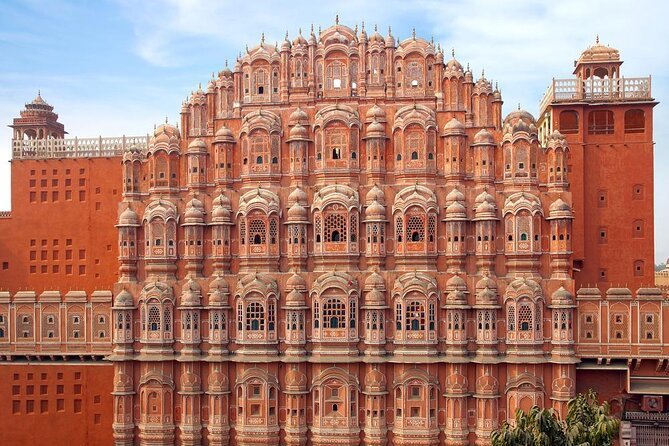
On the second day, shift your focus to the heart of the walled city. No visit to Jaipur is complete without standing before the Hawa Mahal, or the Palace of Winds. Its unique five-story exterior, resembling a honeycomb with 953 small windows (jharokhas), was designed to allow royal ladies to observe everyday life in the street below without being seen. To truly appreciate the city’s layout and history, booking a Jaipur Full Day Tour can provide the necessary context, as expert guides often share anecdotes that aren’t found in standard brochures.
In the afternoon, dive into the local markets. Jaipur is world-renowned for its handicrafts, particularly blue pottery, block-printed textiles, and precious gemstones. Johari Bazaar and Bapu Bazaar are the best places to witness artisans at work. If you prefer a quieter experience, visit the Albert Hall Museum. As the oldest museum in the state, it offers a diverse range of artifacts including metalware, sculptures, and even an Egyptian mummy, all housed within a stunning Indo-Saracenic building. End your evening at Chokhi Dhani, an ethnic village resort that offers a concentrated dose of Rajasthani culture through folk dances, puppet shows, and authentic cuisine.
Day 3: Fortified Views and Spiritual Serenity
The final day is about gaining perspective—literally. Start your morning with a climb to Nahargarh Fort. Situated on the edge of the Aravalli Hills, it offers the most spectacular bird’s-eye view of Jaipur. It was originally built as a retreat and a defensive barrier for the city. From there, a short drive leads you to Jaigarh Fort, home to the Jaivana cannon, which was once the world’s largest cannon on wheels. Unlike the ornamental beauty of Amer, Jaigarh feels rugged and military, showcasing the strategic prowess of the Kachwaha Rajputs.
Before you conclude your journey, find some tranquility at the Galtaji Temple, often referred to as the Monkey Temple. This prehistoric Hindu pilgrimage site is nestled within a mountain pass and features several holy kunds (water tanks) where pilgrims bathe. The natural springs and the backdrop of the rugged hills create a serene atmosphere that contrasts sharply with the bustling city markets. As the sun sets, head to the Birla Mandir, a modern temple built of pure white marble. Watching the temple glow against the twilight sky is a peaceful way to reflect on your three-day odyssey through the Pink City.
Planning Your Visit to the Pink City
To make the most of your 72 hours, consider visiting between October and March when the weather is pleasant for outdoor exploration. While Jaipur is well-connected by air, rail, and road, the internal navigation is best handled by pre-arranged transport to avoid the local bargaining cycle.
Authenticity in travel comes from connecting with the stories behind the stone. By following a structured itinerary and leveraging local expertise, you transform a simple sightseeing trip into a deep dive into India’s royal past. Whether it’s the sound of folk musicians at a fort entrance or the smell of fresh kachoris in a narrow alley, Jaipur promises a sensory experience that stays with you long after you’ve left its pink walls.