
Sawai Madhopur is often celebrated as the gateway to the wild, a place where the rugged beauty of the Aravalli and Vindhya ranges meets the storied past of Rajputana royalty. For those seeking an escape that balances adrenaline with serenity, finding the best resort in Ranthambore serves as the essential first step in exploring this vibrant landscape. While the call of the tiger is undoubtedly the primary draw, the region offers a diverse tapestry of experiences that extend far beyond the jungle’s edge. From ancient architectural marvels to spiritual sanctuaries perched atop cliffs, the district of Sawai Madhopur provides a multi-faceted journey into the heart of Rajasthan’s heritage.
The Majestic Ranthambore Fort
A UNESCO World Heritage site, the Ranthambore Fort stands as a silent sentinel over the National Park. Built in the 10th century, this formidable structure is more than just a military fortification; it is a sprawling complex of temples, palaces, and cenotaphs. Walking through its massive gates—Hathi Pol, Ganesh Pol, and Navlakha Pol—you feel the weight of centuries of history. The fort offers a panoramic view of the surrounding wilderness, where you can often spot vultures circling the thermals and crocodiles basking in the lakes below. Its architectural grandeur, characterized by massive stone walls and intricate stone carvings, reflects the resilience of the Chauhan dynasty.
Spiritual Solace at Trinetra Ganesha Temple
Located within the precincts of the Ranthambore Fort, the Trinetra Ganesha Temple is unique across India. It is the only temple where Lord Ganesha is depicted with three eyes (Trinetra). This temple holds immense cultural significance; thousands of wedding invitations and letters are sent here daily by devotees from across the globe, seeking the elephant-headed god’s blessings for new beginnings. The atmosphere here is one of profound faith, and the climb to the temple is rewarded not just with spiritual peace but with breathtaking vistas of the emerald-green canopy of the national park.
Exploring the Ranthambore National Park
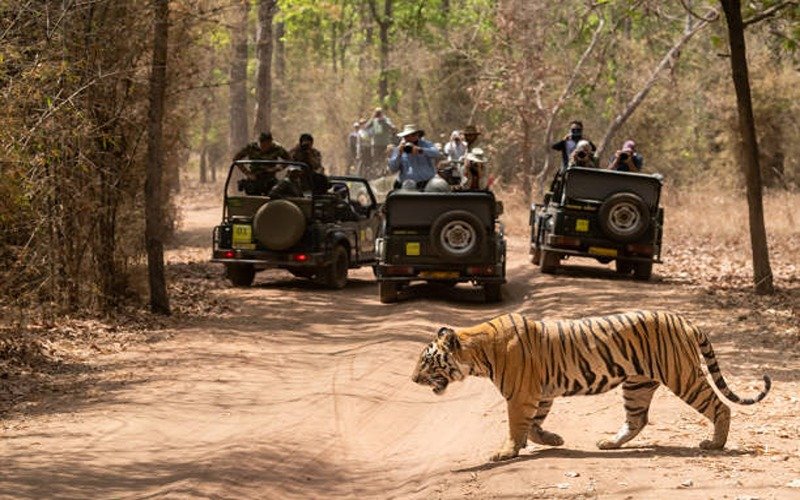
No trip to this region is complete without venturing into the core of the tiger’s lair. Booking a jeep safari in Ranthambore allows travelers to traverse the diverse terrain of the park, ranging from dry deciduous forests to lush grassy meadows. The park is world-renowned for its diurnal tigers, which are frequently spotted even in the daytime, seemingly indifferent to the presence of human observers. Beyond the Royal Bengal Tiger, the ecosystem supports leopards, sloth bears, striped hyenas, and a spectacular array of birdlife including the Crested Serpent Eagle and the Painted Spork. The interplay of wildlife and the ruins of ancient pavilions scattered throughout the park creates a surreal, cinematic atmosphere.
The Serenity of Padam Talao and Malik Talao
The lakes within the park are the lifelines of its inhabitants. Padam Talao is the largest, famous for the stunning Jogi Mahal situated on its banks. During the monsoon and post-monsoon months, the lake is covered with beautiful water lilies (Padam), giving it its name. It is a prime spot for wildlife photography, as animals frequently visit the water’s edge to quench their thirst. Malik Talao, though smaller, is equally significant and is a known haunt for marsh crocodiles and various species of migratory birds that flock to Rajasthan during the winter months.
Cultural Immersion at Rajiv Gandhi Regional Museum of Natural History
For those looking to understand the complex biodiversity of Western India, this museum is an essential stop. It is India’s fourth regional museum of natural history and serves as an educational hub. The exhibits focus on the flora, fauna, and geology of the region, emphasizing the importance of conservation. It provides a deeper context to what visitors see during their safaris, explaining the delicate balance of the Ranthambore ecosystem. The museum is particularly engaging for families and students, offering interactive displays that bring the natural world to life.
The Artistic Heritage of Shilpgram
Located near the village of Ramsinghpura, Shilpgram is a craft complex designed to promote the local arts and crafts of Rajasthan. It is a living museum where visitors can witness artisans at work, creating traditional pottery, textiles, and woodcrafts. This is an excellent place to pick up authentic souvenirs while supporting the local economy. The rustic charm of the village-style architecture provides a quiet contrast to the intensity of wildlife tracking, allowing visitors to appreciate the human element of Sawai Madhopur’s cultural identity.
Planning Your Itinerary
When looking for things to do Sawai Madhapur, it is wise to plan for a stay of at least three to four days. This duration allows for multiple safari drives, which increases the probability of tiger sightings, while leaving ample time to explore the historical sites. Mornings are best reserved for the cool air of the jungle, while afternoons can be dedicated to the architectural wonders of the Fort or the tranquility of the local lakes.
Kachida Valley and Surwal Lake
Kachida Valley is located on the outskirts of the park and is characterized by many rocky outcrops and low hills. This area is particularly known for its leopard population, as these elusive cats often retreat to the valley to avoid the tigers in the core zones. Similarly, Surwal Lake is a birdwatcher’s paradise. Situated about 10 kilometers from the main town, this seasonal lake attracts a plethora of avian species like Pelicans, Flamingos, and Spoonbills during the winter. The sight of a sunrise over the shimmering waters of Surwal, accompanied by the chorus of thousands of birds, is a memory that lingers long after the journey ends.
Visiting Sawai Madhopur is an exercise in mindfulness. Whether you are gazing at the intricate carvings of an ancient temple or waiting in hushed silence for a predator to emerge from the golden grass, the region demands your full attention. It is a place where the wild and the civilized coexist in a fragile, beautiful harmony. By choosing to explore both the natural wonders and the historical landmarks, you gain a holistic understanding of why this corner of Rajasthan remains one of the most cherished destinations in India.