
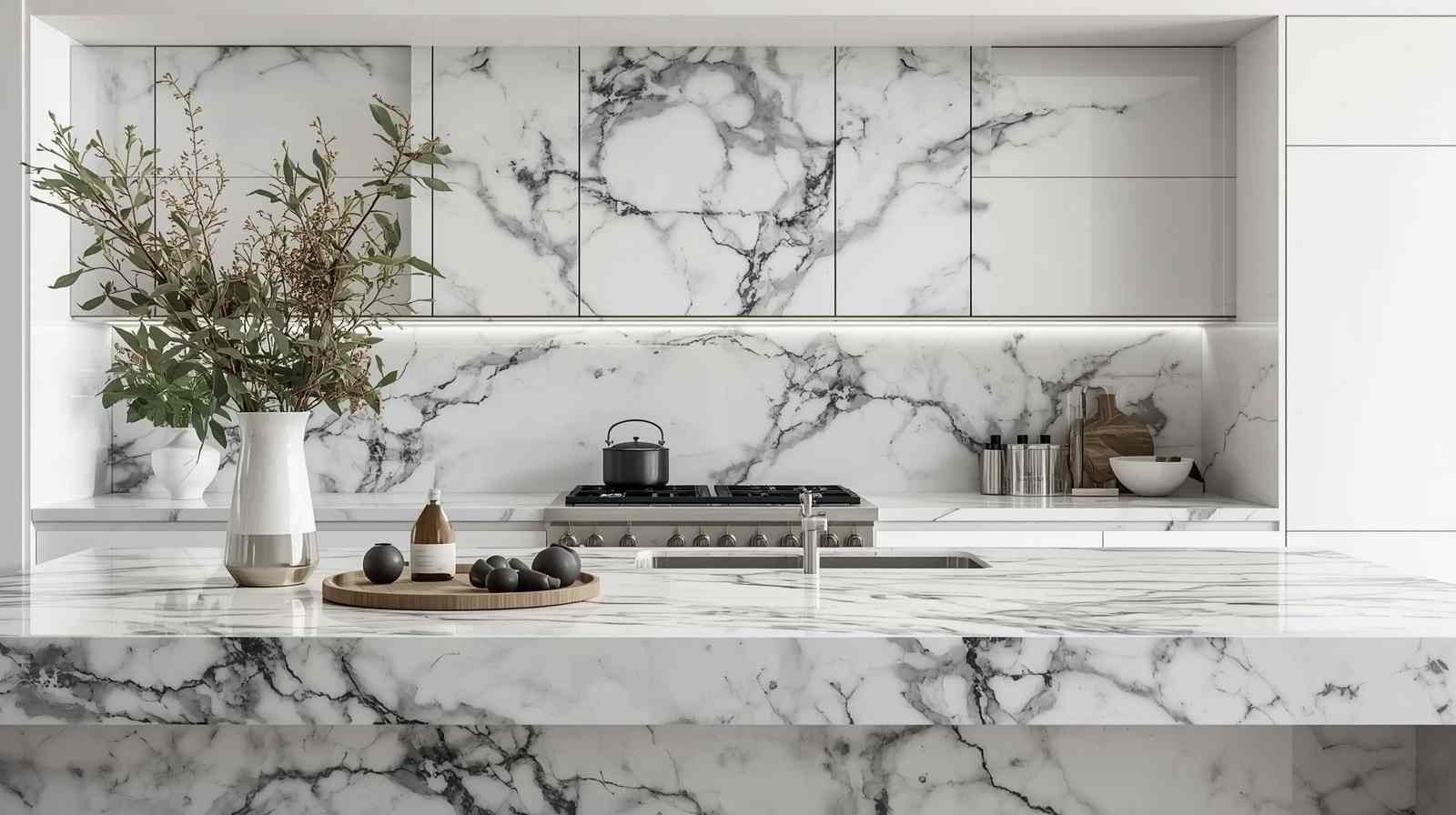
Choosing the right flooring for a kitchen requires a delicate balance between aesthetic elegance and functional durability. As a prominent marble exporter in India, we have observed how homeowners increasingly gravitate toward natural stone to elevate their culinary spaces. Marble offers a timeless sophistication that few other materials can replicate, providing a luxurious foundation for both modern and traditional kitchen designs. However, integrating this material into a high-traffic zone involves careful consideration of its physical properties and maintenance requirements.
Aesthetic Appeal and Architectural Versatility
The primary driver for selecting natural stone is its unparalleled visual depth. Each slab features unique veining and crystallization patterns, ensuring that no two kitchens look exactly alike. From the deep, dramatic tones found in Mercury Black Marble in India to the intricate, swirling patterns seen in Magic Black Marble in India, the design possibilities are virtually limitless. These stones act as a focal point, grounding the kitchen design while offering a polished finish that reflects light, effectively brightening smaller cooking areas and adding a sense of grandeur to larger, open-plan spaces.
Examining the Durability of Marble Kitchen Floors
When evaluating marble for kitchen environments, it is essential to understand that it is a metamorphic rock, typically composed of recrystallized carbonate minerals. While it is remarkably hard, it remains porous. In a kitchen setting, this means the surface is susceptible to staining from common ingredients like citrus juices, vinegar, wine, and oils. Experienced designers often emphasize that while marble is structurally sound, it requires a proactive approach to surface protection. Regular sealing is a non-negotiable aspect of ownership, acting as a barrier against spills and moisture penetration that could otherwise etch or dull the stone over time.
Advantages of Natural Stone Flooring
The benefits of choosing high-quality marble extend beyond mere appearance. Stone is an excellent thermal conductor, making it an ideal candidate for kitchens equipped with radiant floor heating systems. Underfoot, natural marble feels cool and consistent, providing a solid, high-end feel that synthetic alternatives struggle to emulate. Furthermore, marble is highly resistant to heat, meaning that accidental placement of warm cookware on the floor—though not recommended—will not cause the material to melt, warp, or off-gas harmful chemicals. For homeowners focusing on property value, marble is a sought-after upgrade that often enhances the perceived worth and marketability of a residence.
Addressing Practical Challenges and Maintenance
The “con” side of the ledger primarily involves the maintenance lifestyle required to keep the stone in pristine condition. Because marble is sensitive to acidic substances, users must adopt a “clean-as-you-go” habit to prevent etching. Etching is not a stain; it is a physical reaction where the acid eats into the mineral structure of the stone, leaving a matte mark on an otherwise polished surface. For those who view their kitchen as a high-activity workspace rather than a showroom, this maintenance might seem demanding. However, many enthusiasts argue that the natural patina—the soft, weathered look that develops on marble over years of use—actually enhances the character and authenticity of the space.
Installation Considerations for Kitchen Projects
Proper installation is the bedrock of long-term satisfaction with marble flooring. Using the correct thin-set mortar and ensuring a perfectly level subfloor is critical to prevent cracking, especially in areas with heavy foot traffic or where heavy appliances reside. We recommend consulting with professional installers who have specific expertise in working with natural stone. Their ability to properly match slab grains and ensure tight grout joints is what separates a standard floor from a seamless, high-end design installation. Furthermore, selecting the right finish—such as honed versus polished—can significantly impact the stone’s slip resistance and how visible wear becomes over time.
Concluding Thoughts on Stone Selection
Deciding whether to utilize marble in your kitchen is a trade-off between the desire for unmatched natural beauty and the commitment to a specific maintenance regimen. If you value a space that evolves with the home and carries the unique signature of the earth, marble remains an elite choice. By selecting high-quality materials and committing to routine maintenance, you can ensure that your stone floor remains a durable and striking feature of your home for decades. Whether you are aiming for a monochromatic, sleek aesthetic or a bold, high-contrast look, working with premium stone provides the texture and prestige necessary to define a luxury kitchen environment.