
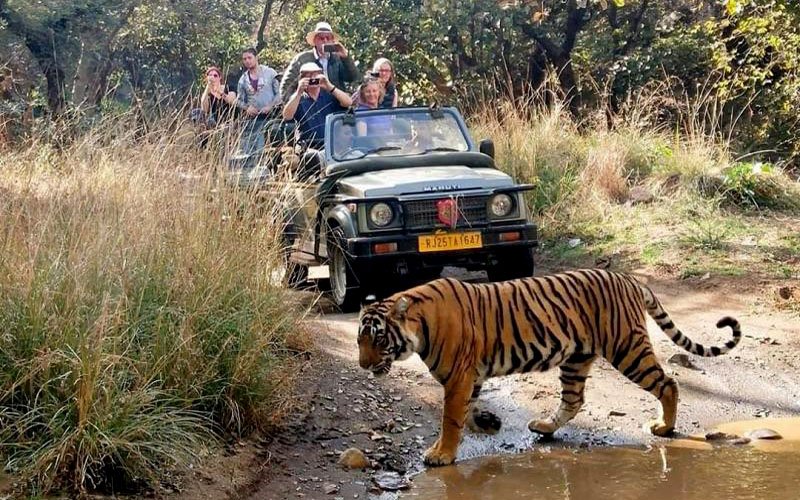
Transitioning from the bustling pink sandstone avenues of Jaipur into the rugged, dry deciduous forests of Sawai Madhopur is one of northern India’s most compelling road journeys. Within a single morning, the stately remnants of Kachwaha Rajput royalty give way to the ancient hunting grounds of the Royal Bengal tiger. Crafting an itinerary between these two destinations requires practical logistical knowledge, seasonal awareness, and an understanding of the region’s wildlife conservation framework.
Planning the Journey from Jaipur to Sawai Madhopur
The distance from Jaipur to Ranthambore measures roughly 160 to 180 kilometers depending on your departure point within the state capital. Travelers primarily choose between private roadway transit and the Indian Railways network, each offering distinct advantages depending on your schedule.
By road, the route via the Delhi-Mumbai Expressway and NH 552 or the older State Highway 24 typically takes between three to four hours. Utilizing the expressway cut-offs significantly reduces travel fatigue, allowing visitors to arrive in time for an afternoon forest shift. Private cabs, self-drive vehicles, and pre-booked chauffeur services remain the most flexible option for families carrying photography gear or extensive luggage.
Travelers opting for rail transit will find regular direct connections departing from Jaipur Junction (JP) to Sawai Madhopur Junction (SWM). Express routes such as the Kota Jan Shatabdi or various intercity expresses cover the track distance in roughly two to two and a half hours. Sawai Madhopur railway station sits just 12 to 14 kilometers from the main reserve boundary, making auto-rickshaws and resort transfer shuttles immediately accessible upon arrival.
Optimal Timing and Seasonal Considerations
Ranthambore National Park operates under strict seasonal schedules managed by the Rajasthan Forest Department. The core safari zones (Zones 1 through 5) open annually on October 1 and close on June 30, resting during the monsoon rejuvenation period from July through September. Buffer zones (Zones 6 through 10) frequently remain accessible year-round, though wildlife movement patterns vary.
Winter visits spanning November through February offer crisp mornings, pleasant afternoon sun, and vivid landscapes ideal for birdwatching alongside migratory waterfowl. Summer trips running from April through June present higher temperatures often exceeding 40 degrees Celsius, but the dried underbrush and diminishing waterholes drastically concentrate wildlife around perennial lakes like Padam Talao, Rajbagh, and Malik Talao. Packing breathable neutral-toned linen, broad-brimmed hats, polarized sunglasses, and dust-resistant camera wraps ensures comfort during dry trail drives.
Curating Your Wilderness Stay
Selecting an accommodating base camp establishes the foundation of an enriching wilderness retreat. Setting up camp at a trusted resort in Ranthambore allows travelers to unwind in traditional Rajasthani architecture, sample authentic regional cuisine such as dal baati churma and ker sangri, and coordinate safari schedules seamlessly.
For partners seeking a blend of adventurous forest tracks and private leisure under starlit canopies, booking a curated Ranthanbore 2N 3D Couple Package delivers structured safari coordination alongside tranquil evenings away from city noise. Dedicated naturalists stationed at regional properties provide detailed insights into territorial movements, resident big cat lineages, and regional flora, bridging leisure hospitality with genuine ecological awareness.
Maximizing Your Safari Encounters
Safaris in Ranthambore are strictly regulated to protect habitat integrity while allowing educational wilderness encounters. Game drives operate in two daily shifts: one starting shortly after sunrise and another concluding right before dusk. Forest authorities permit two primary vehicle types inside the gates: twenty-seater open-top canters and agile six-seater four-wheel-drive open gypsies.
Securing a Jeep safari in Ranthambore provides enthusiasts with greater maneuverability across winding rocky paths, lower engine noise, and flexible vantage angles for tracking warning calls. When tracking apex predators, experienced trackers rely heavily on natural alarm indicators. The sharp barking call of the sambar deer, the staccato coughing bark of the northern plains gray langur, and fresh pugmarks pressed into soft sandy riverbeds indicate active movement long before an animal emerges into plain view.
Beyond the flagship Royal Bengal tiger (Panthera tigris), the ecosystem sustains healthy populations of Indian leopards, sloth bears, striped hyenas, caracals, marsh crocodiles, and over three hundred recorded resident and migratory avian species.
Historic Splendor Inside the Forest
No wilderness tour in this corridor is complete without exploring the UNESCO World Heritage-listed Ranthambore Fort. Perched atop a 700-foot cliff inside the park boundary, this tenth-century bastion commands panoramic views over the surrounding canopy, ancient cenotaphs, and forest lakes.
Visitors climbing the stone stairs frequently visit the historic Trinetra Ganesha Temple, where devotees from across the nation send wedding invitations and prayer letters daily. The ramparts present dramatic photographic frames where medieval stone masonry blends directly with natural cliff edges, reminding travelers that human heritage and raw wilderness have coexisted across this Rajasthani landscape for centuries. Balancing morning jungle tracking with an afternoon walking tour through the fort ensures your journey from Jaipur captures the complete historical and natural essence of the region.