
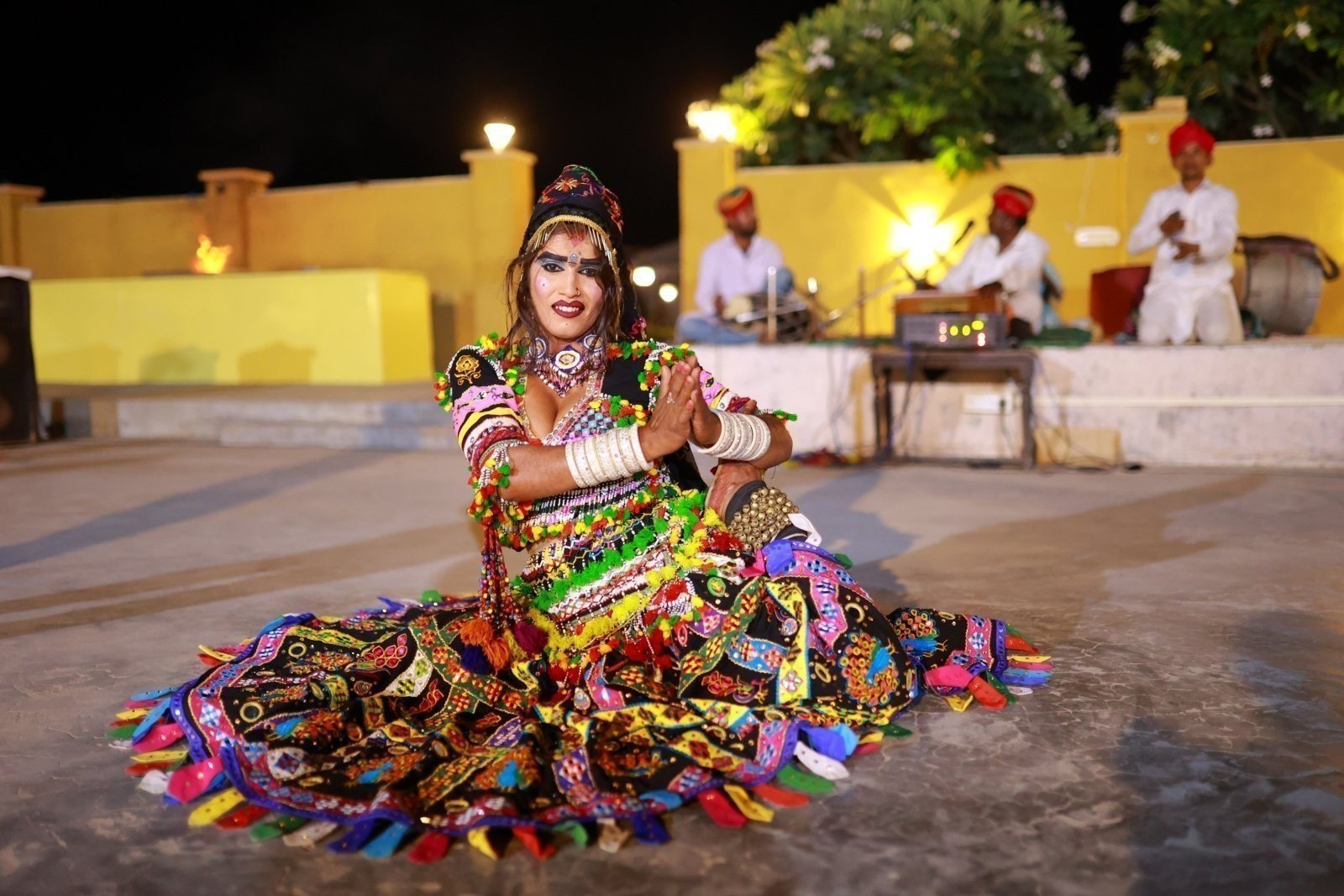
Stepping out into the Thar Desert at dusk feels completely different from walking through the bustling lanes of the Golden City. Having spent many crisp winter evenings sitting beside crackling bonfires near Sam Sand Dunes in Kanoi, I have seen firsthand how the silence of the shifting sands transforms the moment local musicians tune their instruments. Choosing a desert camp in Jaisalmer is rarely just about finding a place to sleep; for most travelers, it is about experiencing the living heritage of western Rajasthan through its music, storytelling, and warm hospitality. At Magra Desert Camp, the evening gathers travelers around an open courtyard under clear desert skies, bringing centuries-old Marwari traditions directly to the dunes.
The Heartbeat of the Thar: Traditional Folk Performances
When the sun drops below the horizon and the desert air cools rapidly, the cultural evening begins with an acoustic warmth that no recorded track can replicate. Local folk artists from nearby villages arrive with instruments crafted from wood, goat skin, and brass. Before the dancers even step onto the sand, the haunting melody of the kamayacha and the sarangi sets the mood, accompanied by the rhythmic pulse of the dholak and the metallic clack of khartaal wooden clappers.
Experiencing a live cultural dance in Jaisalmer gives visitors a rare window into communities that have preserved their art forms across generations without written scripts. Rather than staged theatrical routines, these performances are rooted in seasonal celebrations, royal court traditions, and nomadic storytelling.
- Kalbeliya Dance: Recognized by UNESCO as an Intangible Cultural Heritage, this mesmerizing performance is presented by women of the nomadic Kalbeliya community. Dressed in flowing black skirts embroidered with silver threads and mirror work, the dancers mimic the fluid, sinuous movements of a desert serpent while spinning rapidly to the hypnotic notes of the been.
- Ghoomar: Originally performed in the royal courts of Marwar, Ghoomar is Rajasthan’s signature folk dance. Women move in graceful circles, their wide, brightly colored ghaghras billowing outward in synchronized waves as they clap and sway to traditional ballads.
- Bhavai and Fire Acts: Among the most jaw-dropping moments of the night is the Bhavai dance, where performers balance multiple brass pitchers or flaming pots on their heads while walking barefoot across the edges of brass plates or shattered glass.
- Manganiyar and Langa Folk Ballads: The hereditary musicians of the Thar sing soulful tales of monsoon rains, legendary desert romances, and Rajput valor, often inviting guests to clap along around the fire.
Comfort Meets Heritage on the Dunes
After hours of clapping along to folk rhythms and stargazing away from city light pollution, having a quiet, well-appointed space to retreat to makes all the difference. Many first-time visitors assume desert camping means roughing it in basic canvas shelters, yet modern hospitality in Kanoi blends traditional aesthetics with practical comfort. Staying inside a Swiss tent in Jaisalmer allows travelers to enjoy thick mattresses, clean attached bathrooms with running water, and warm bedding that keeps out the sharp desert chill.
At Magra Desert Camp, the layout is designed so guests can step directly from their private veranda into the open desert atmosphere while still having reliable amenities close at hand. Families, couples, and small groups each need slightly different setups—whether that means extra bedding for children or quiet corners away from the main gathering area—so confirming tent categories and package inclusions ahead of arrival ensures a smooth stay.
Authentic Marwari Flavors Around the Bonfire
Culture in Jaisalmer is tasted just as deeply as it is heard. Following the dance performances, dinner introduces travelers to hearty regional recipes adapted to arid desert life, where fresh green vegetables were historically scarce.
- Dal Baati Churma: Hard wheat dough balls baked over slow embers, crushed and soaked in pure desi ghee, served alongside spicy five-lentil dal and sweet, crumbly churma.
- Ker Sangri: A tangy, spiced preparation made from wild desert berries (ker) and dried beans (sangri) cooked with dry red chilies and local spices.
- Gatte Ki Sabzi: Steamed gram flour dumplings simmered in a rich, mildly spiced yogurt gravy, typically paired with hot bajra (pearl millet) rotis.
Practical Tips for Respectful Cultural Immersion
To get the most out of your evening on the dunes, a few simple habits go a long way toward supporting local performers and staying comfortable:
- Dress in Layers: Even when afternoon temperatures feel warm between October and March, desert temperatures drop sharply after sunset. Carry a shawl, fleece, or light jacket for the outdoor show.
- Ask Before Close-Up Photos: Performers generally welcome photography during their acts, though asking politely before taking close-up portraits shows genuine respect for the artists.
- Join the Circle: When dancers invite guests onto the courtyard floor during the final Ghoomar set, stepping in—even if you miss a beat—is warmly appreciated by the troupe.
- Verify Evening Timings: Cultural programs usually run between 7:00 PM and 9:30 PM, right after sunset camel or jeep safaris conclude. Confirming exact schedules with Magra Desert Camp upon check-in helps you plan your sunset dune walk without rushing.
Planning Your Overnight Desert Experience
A single overnight stay in Sam Sand Dunes complements daytime visits to Jaisalmer Fort, Patwon Ki Haveli, and Gadisar Lake. Arriving at the camp by mid-afternoon gives you enough time to settle into your accommodation, head out onto the ripples of the dunes before sunset, and return just as the lanterns are lit and the dholak beats begin to echo across the sand. By the time morning tea arrives with views of the sun rising over empty golden ridges, you leave with a much deeper appreciation for the people who call the Thar home.