
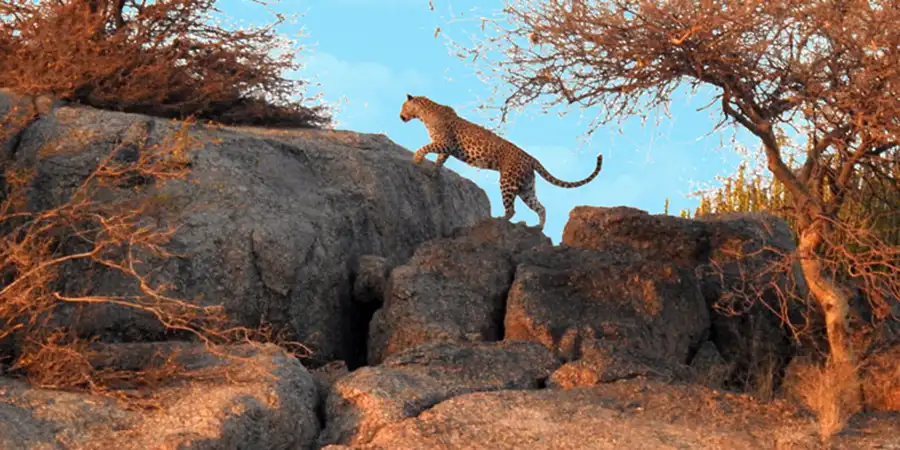
Deep within the Pali district of Rajasthan, where the ancient Aravalli Range gives way to vast open wilderness, lies Jawai. Unlike traditional tiger reserves or enclosed national parks, Jawai offers an extraordinarily rare safari experience defined by rugged granite monoliths, shimmering reservoir waters, and wild big cats roaming completely unfenced. It is a realm where wilderness meets living heritage, creating Rajasthan’s most authentic and rewarding eco-tourism destination.
The Untamed Landscape of Jawai Bandh
Formed over millions of years, the dramatic landscape of Jawai is dominated by giant granite boulders, natural caves, and thorn scrub forests. At the heart of this region is Jawai Bandh, the largest dam in western Rajasthan, constructed across the Jawai River. This sprawling body of water acts as an oasis, sustaining diverse wildlife and attracting thousands of migratory birds each winter.
The sheer rock faces and natural cave shelters provide an ideal habitat for wild leopards. Because the terrain naturally separates human settlements from high granite perches, leopards have claimed these hills as their kingdom without the need for artificial boundaries or sanctuary fences.
Sacred Coexistence: The Rabari Tribe and the Big Cats
What truly sets Jawai apart from any other wildlife destination on Earth is the sacred bond between humans and predators. For centuries, the nomadic Rabari tribe—distinguished by their vibrant red turbans, white garments, and intricate silver jewelry—has shared this land with wild leopards.
The Rabaris revere the leopard as a divine guardian associated with their local deity, Devgiri Temple. When leopards occasionally prey on livestock, the pastoralists do not retaliate; instead, they view it as a sacred tax paid to nature. This deep-rooted cultural reverence has fostered an unprecedented level of peaceful coexistence. It is common to witness a leopard resting lazily on a granite outcrop just a few hundred meters above a Rabari village while herdsmen tend to their sheep below.
Experiencing the Ultimate Wildlife Safaris
A safari in Jawai is far removed from the regimented, overcrowded jeep tracks of conventional game reserves. Customized open 4×4 vehicles navigate raw terrain, sand beds, and steep granite slopes driven by expert local trackers who have read these rocks for decades.
A morning or dusk drive offers exceptional opportunities for tracking big cats as they descend from cave shelters to hunt or sunbathe on warmth-retaining boulders. Booking a specialized leapard safari Jawai allows travelers to observe these majestic animals in their natural element with unmatched sighting frequency.
Beyond big cats, Jawai’s ecosystem supports a rich array of fauna:
- Avian Diversity: Jawai Dam hosts over 100 bird species, including flamingoes, bar-headed geese, Sarus cranes, and demoiselle cranes during winter months.
- Reptiles & Predators: Mugger crocodiles bask along the reservoir banks, while striped hyenas, jackals, jungle cats, and sloth bears inhabit the surrounding scrub.
- Cultural Walks: Walking alongside Rabari herdsmen offers intimate insights into ancient pastoral traditions, indigenous herbal medicine, and desert survival skills.
Luxury Meets Wilderness at The Jawai Sagar
After an exhilarating day navigating rocky outcroppings and tracking wildlife, returning to a refined sanctuary enhances the magic of the desert. Setting the benchmark for eco-conscious luxury, The Jawai Sagar blends seamless modern comforts with authentic Rajasthani hospitality.
Choosing a premier leopard safari resort in Jawai ensures that your journey preserves the delicate balance of local ecology while offering bespoke wildlife tracking led by veteran naturalists. Guests enjoy thoughtfully curated culinary experiences featuring farm-to-table regional dishes, serene views of the Aravalli horizon, and private bonfires under starry desert skies.
Indulging in a luxury stay in Jawai provides a tranquil retreat where elegant design meets raw wilderness, allowing you to unwind in spacious suites that honor local heritage and sustainable architecture.
Travel Tips for Planning Your Jawai Adventure
To maximize your wilderness expedition in Jawai, consider the following expert travel tips:
- Best Season: October to April offers pleasant weather, active wildlife, and peak migratory bird arrivals.
- Safari Timing: Early morning safaris catch leopards returning from nocturnal hunts, while late afternoon safaris capture breathtaking sunsets over granite peaks.
- Photography Gear: Bring telephoto lenses (300mm or higher) for wildlife, alongside wide-angle lenses for landscape shots of the granite hills and dramatic skies.
- Respectful Tourism: Always follow your naturalist’s guidance during village walks and safaris, keeping a respectful distance from both wildlife and sacred community sites.
Jawai stands as a living testament to what wild places can be when conservation, culture, and luxury come together in harmony. Exploring this granite haven promises memories that endure long after the desert dust settles.