
Gandhinagar, the planned capital of Gujarat, presents a balanced mix of architectural ambition, lush green spaces, and cultural heritage. Designed on a grid system along the banks of the Sabarmati River, it offers an organized retreat for cultural travelers, families, and architecture enthusiasts. Planning a focused 48-hour itinerary requires understanding local transit patterns, seasonal temperatures, and monument access rules to maximize your exploration without unnecessary backtracking.
Day 1: Monumental Architecture and Evening Splendor
Morning: Stepwells and Foundations
Begin your exploration at the Adalaj Stepwell (Adalaj ni Vav), located just on the southwestern rim of the city. Built in 1498 by Queen Rudabai, this five-story subterranean structure illustrates the pinnacle of Solanki-style architecture. Arriving between 8:00 AM and 9:00 AM allows you to examine the intricate carvings of floral friezes, mythological scenes, and geometric stone columns before mid-morning tourist groups arrive. The stepwell’s temperature drops noticeably as you descend the octagonal landings, offering relief during warmer months.
After Adalaj, take a short drive to the Dandi Kutir museum complex in Sector 13. Shaped like an earthen salt mound, this experiential museum chronicles the life and philosophy of Mahatma Gandhi using audio-visual installations, archival documentation, and preserved artifacts. Allocate at least two full hours here, as the guided digital walkthrough moves methodically through the historical timeline of the Indian freedom movement.
Afternoon: Culinary Traditions and Rest
Head toward the central sector markets to sample an authentic Gujarati thali. Traditional dining halls in Sector 16 and Sector 11 serve seasonal vegetarian preparations featuring ringna no olo, kadhi, rotla, and freshly prepared farsan.
When establishing your base in the capital, business executives and vacationers often select a luxury hotel in Gandhinagar to balance proximity to both the historic core and the contemporary high-tech skyline of Gujarat International Finance Tec-City.
Evening: Akshardham Temple and Water Show
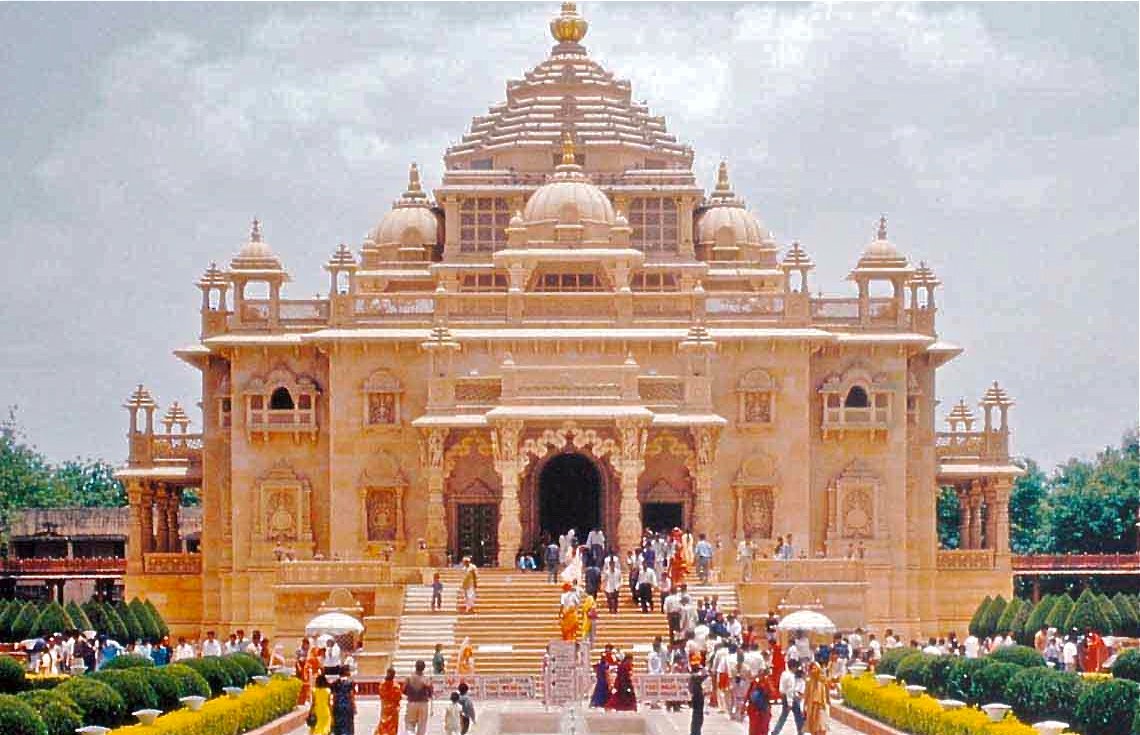
Dedicate the late afternoon and evening exclusively to the Swaminarayan Akshardham complex in Sector 20. The sandstone temple monument stands at the center of 23 acres of manicured lawns. Because personal items, mobile phones, and cameras must be deposited at security counters, budget 30 minutes for entry protocols.
Once inside, examine the detailed pink stone carvings depicting ancient artisans and spiritual traditions. As dusk settles, proceed to the Sat-Chit-Anand water show. This presentation combines synchronized fountains, fire effects, lasers, and narrative projections onto stone facades to convey moral parables from Indian philosophy. Conclude the day with a light dinner at the temple complex’s food court before returning to your accommodations.
Day 2: Urban Forests, Botanical Sanctuaries, and Craft Legacies
Morning: Biodiversity and Riverfront Ecology
Start Day 2 early at Indroda Dinosaur and Fossil Park, recognized by paleontologists as one of the significant hatchery and fossil sites in the region. Managed by the Gujarat Ecological Education and Research (GEER) Foundation, the park spans over 400 hectares along the Sabarmati. Walk through the botanical garden, the deer sanctuary, and the fossil exhibit containing fossilized dinosaur eggs discovered in the Raiyoli basin.
Continue to the Puneet Van in Sector 19, a specialized botanical garden where trees are planted according to astrological constellations and Ayurvedic classifications. The walking tracks provide quiet avenues shaded by neem, peepal, and banyan trees.
Finding the best accommodation in Gandhinagar ensures you can recharge between these excursions, particularly if your group requires dedicated wellness suites, fitness facilities, and tranquil riverfront surroundings.
Afternoon: Crafts and Heritage Textiles
Travel to the Craftsmen’s Village in Pethapur, situated approximately seven kilometers from the city center. For generations, artisans in Pethapur have hand-carved intricate teakwood blocks used for traditional block printing across Gujarat and Rajasthan. Visiting their home workshops provides firsthand observation of how carvers use basic chisels and hand drills to etch symmetrical floral patterns and geometric motifs into seasoned wood blocks.
Stop for an afternoon tea service at an established venue. Many visitors traveling with multiple generations prefer spending leisure hours at a premier family club in Gandhinagar to enjoy swimming facilities, squash courts, and quiet lounge spaces away from city traffic.
Evening: Mahatma Mandir and Open Vistas
Conclude your two-day tour with an evening walk around the perimeter of Mahatma Mandir in Sector 13. While the convention halls host global summits, the surrounding open plazas, landscaped water channels, and broad boulevards reflect the city’s modern administrative scale. As the sun sets over the green canopy, you will observe the distinct contrast between Gandhinagar’s heritage core and its progressive civic planning.
Essential Practical Tips for Visitors
- Gandhinagar’s grid layout consists of 30 numbered sectors divided by lettered arterial roads. Sector 1 through Sector 30 form a predictable grid, making local auto-rickshaws and app-based cabs easy to navigate.
- Akshardham Temple is closed to visitors on Mondays; schedule your itinerary accordingly to avoid access disruptions.
- The optimal travel window falls between October and March, when daytime temperatures hover comfortably between 20°C and 30°C.