
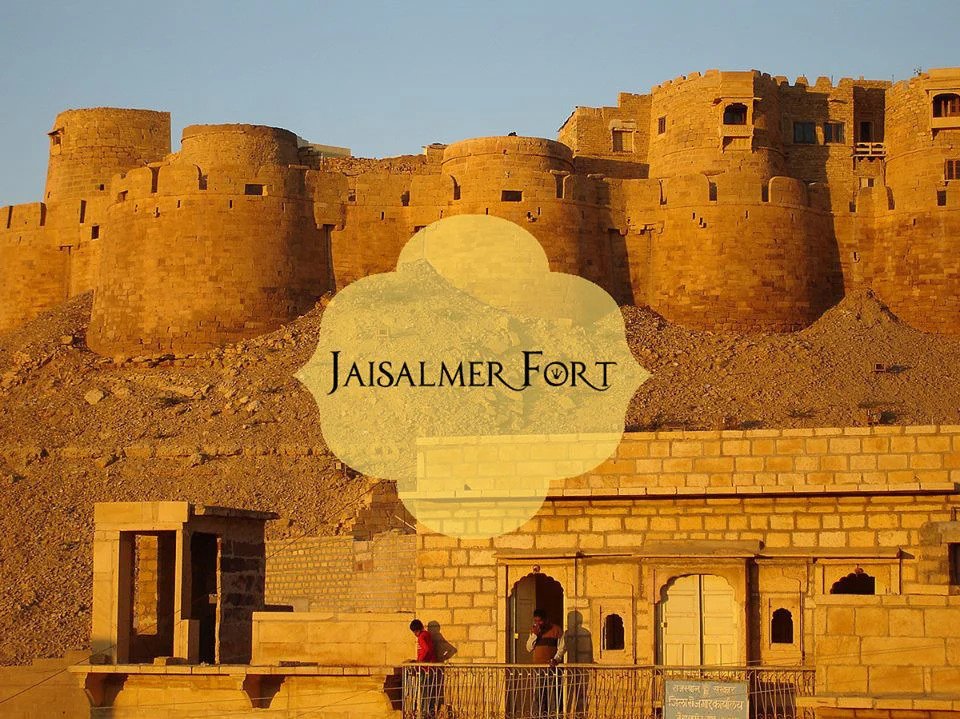
Planning a short trip to the Golden City requires a clear route so you can experience both its medieval sandstone architecture and the vast stretches of the Thar Desert without feeling rushed. Based on our daily local experience hosting travelers at Magra Desert Camp, we have mapped out the most practical, geographically logical two-day itinerary. Following this sequence saves hours of backtracking and ensures you reach every landmark during the best light and coolest hours of the day.
Day 1: The Living Fort, Merchant Havelis, and Gadisar Lake
Morning: Jaisalmer Fort (Sonar Quila)
Begin your first day at 9:00 AM at Jaisalmer Fort, rising out of Trikuta Hill. Built in 1156 AD by Rawal Jaisal, this UNESCO World Heritage Site is one of the few living forts in the world. Roughly a quarter of the old city’s population still resides inside its massive yellow sandstone walls, running homes, guesthouses, and handicraft shops. Starting early helps you walk the cobbled alleys before tour buses arrive and before the desert sun climbs too high. Spend two to three hours exploring the Raj Mahal palace museum, admiring the seven intricately carved Jain Temples dating back to the 12th through 15th centuries, and taking in panoramic views of the city from the cannon ramparts.
Midday: Patwon Ki Haveli and Nathmal Ki Haveli
By late morning, walk down from the fort’s main gate into the old town lanes to visit Patwon Ki Haveli. Built in the 19th century by a wealthy Jain merchant family, this cluster of five interconnected mansions showcases honey-colored sandstone facades carved with fine latticework that looks almost like lace. A short five-minute walk brings you to Nathmal Ki Haveli, commissioned in 1885 for the Prime Minister of Jaisalmer. Two architect brothers carved the left and right wings simultaneously, creating a facade that appears symmetrical at first glance yet reveals subtle, fascinating differences upon closer inspection. Stop nearby for a traditional Rajasthani lunch featuring ker sangri, dal baati churma, and bajra roti before the afternoon heat peaks.
Late Afternoon: Salim Singh Ki Haveli and Gadisar Lake
In the afternoon, walk over to Salim Singh Ki Haveli, easily recognizable by its distinctive arched roof shaped like a dancing peacock and its thirty-eight uniquely carved balconies. From there, take a ten-minute auto-rickshaw ride to Gadisar Lake on the southeastern edge of the city. Originally excavated in the 14th century as Jaisalmer’s primary water reservoir, the lake is surrounded by sandstone chhatris, shrines, and ghats. Watching the late-afternoon sun turn the carved Tilon Ki Pol archway gold while boats glide across the calm water provides a peaceful close to your first day in the city.
Day 2: Haunted Villages, Royal Cenotaphs, and the Thar Desert
Morning: Bada Bagh and Kuldhara Abandoned Village
Check out of your city hotel after breakfast on Day 2 and head west toward the desert belt. Your first stop, located about six kilometers north of the city, is Bada Bagh. This garden complex houses a striking collection of royal cenotaphs built in memory of the Maharajas of Jaisalmer. Visiting in the morning light allows you to photograph the domed sandstone structures framed against surrounding wind turbines without harsh shadows. Continue southwest for another eighteen kilometers to reach Kuldhara, an atmospheric abandoned village established by Paliwal Brahmins centuries ago. Local history recounts how the entire community deserted the settlement overnight in the early 19th century to escape oppressive taxation. Walking through the crumbling stone homes and preserved central temple offers a quiet, compelling look into regional folklore and desert survival.
Afternoon: Arrival at Sam Sand Dunes
From Kuldhara, continue driving roughly twenty-five kilometers west until the rocky scrubland gives way to sweeping golden waves of sand. Arriving at a desert camp in Sam sand dunes by mid-afternoon gives you plenty of time to settle in before the evening rush. At Magra Desert Camp, guests check into spacious luxury tents in Jaisalmer designed with traditional Rajasthani block-print interiors, private verandas, and modern attached bathrooms so you can rest comfortably after a morning of sightseeing.
Evening: Desert Safari, Sunset, and Cultural Night
Around 4:30 PM, head out onto the shifting ridges for your desert safari. Travelers can choose between a rhythmic camel ride along the dune crests or a thrilling 4×4 jeep safari across the steeper slopes. Reach the highest ridge by 5:45 PM to watch the sun dip below the horizon, painting the Thar Desert in deep shades of amber and violet. After dusk falls, return to camp for a bonfire night on dunes in Jaisalmer, where local Manganiyar folk musicians and Kalbelia dancers perform around the fire. Following an authentic Rajasthani buffet dinner under a clear, star-filled desert sky, you can wake up the next morning to a quiet desert sunrise and breakfast before your return journey to Jaisalmer railway station or airport.
Practical Tips for Your Two-Day Jaisalmer Route
- Best Season to Visit: Plan your trip between October and March, when daytime temperatures stay pleasant for walking the fort and desert nights are cool enough to enjoy sitting beside an outdoor fire.
- Footwear and Clothing: Wear sturdy, closed-toe walking shoes for uneven stone alleys inside the fort, and pack breathable cotton layers alongside a warm jacket or shawl for chilly desert evenings.
- Cash and Connectivity: Carry small denominations of cash for monument entry tickets, auto-rickshaws, and local craft stalls, as mobile network coverage drops intermittently once you travel past Kuldhara toward the dunes.
- Advance Reservations: Book your overnight desert stay and safari slots at least two to three weeks ahead during peak winter holidays and long weekends to secure preferred tent locations.