
Jaisalmer, the “Golden City,” is a living tapestry of honey-hued sandstone, intricate architecture, and legendary folklore. Navigating this desert jewel requires more than just a map; it requires an itinerary that balances the grandeur of its fort with the haunting silence of its outskirts. As a premier travel agency in jaisalmer, we have curated this definitive 2-day guide to help you navigate the winding lanes and shifting sands like a seasoned explorer.
Day 1: The Golden Heart of the City
Your journey begins at the break of dawn. To experience the city’s soul, you must start where the water meets the morning light.
Morning: Gadisar Lake and Vyas Chhatri Start your first day at Gadisar Lake. Built in the 14th century, this man-made reservoir was once the only source of water for the entire city. The artistic gateways, known as Tilon-ki-Pol, and the small shrines surrounding the water offer a serene atmosphere. Feeding the catfish or taking a quiet boat ride provides a unique perspective of the sandstone architecture reflecting on the water. From here, a short drive leads to Vyas Chhatri, the cenotaphs dedicated to Sage Vyas. These structures serve as a beautiful example of Rajasthani architecture and offer a panoramic view of the Jaisalmer Fort.
Afternoon: The Living Fort and Patwon Ki Haveli Jaisalmer Fort, or Sonar Quila, is unique because it is a “living fort,” housing nearly one-fourth of the city’s old population. Wandering through its narrow alleys feels like stepping back in time. Visit the Raj Mahal, the Jain Temples, and the Laxminath Temple located within the ramparts. After exploring the fort, walk down to Patwon Ki Haveli. This is not just one building but a cluster of five small havelis. It is the largest and most intricately carved haveli in the city, showcasing the immense wealth of the traders who once lived here. The gold-colored stone carvings are so fine they often resemble lace.
Evening: Local Markets and Authentic Flavors Conclude your first day by immersing yourself in the local culture at Sadar Bazaar. This is the place to find traditional Rajasthani textiles, leather goods made from camel hide, and silver jewelry. For dinner, seek out local delicacies like Ker Sangri or Gatte ki Sabzi. Choosing a Jaisalmer sightseeing tour ensures that you don’t miss these hidden culinary spots that only locals know about.
Day 2: Into the Desert Mystique
Day two shifts from the urban splendor to the vast, mysterious landscapes that define the Thar Desert.
Morning: The Haunting Legend of Kuldhara After breakfast, head west toward Kuldhara, located about 18 kilometers from the main city. Known as the “Ghost Village,” Kuldhara was abandoned overnight in the early 19th century by the Paliwal Brahmins. Legend says they cursed the land so that no one could ever inhabit it again. Walking through the ruins of over 400 homes, the temple, and the stepwell is an eerie yet fascinating experience. It provides a stark contrast to the bustling energy of the city you explored on day one.
Afternoon: Lodurva and Amar Sagar On your way back toward the dunes, stop at Lodurva, the ancient capital of the Bhatti Rajputs before Jaisalmer was founded. The Jain temple here is architectural perfection, featuring a “Kalpavriksha” (divine tree) made of five metals. Nearby lies Amar Sagar, a palace and lake complex known for its beautiful carvings and cooling atmosphere. To cover these spread-out locations comfortably, hiring a reliable Jaisalmer taxi service is highly recommended, as it allows you to maintain your own pace without the stress of navigating desert roads.
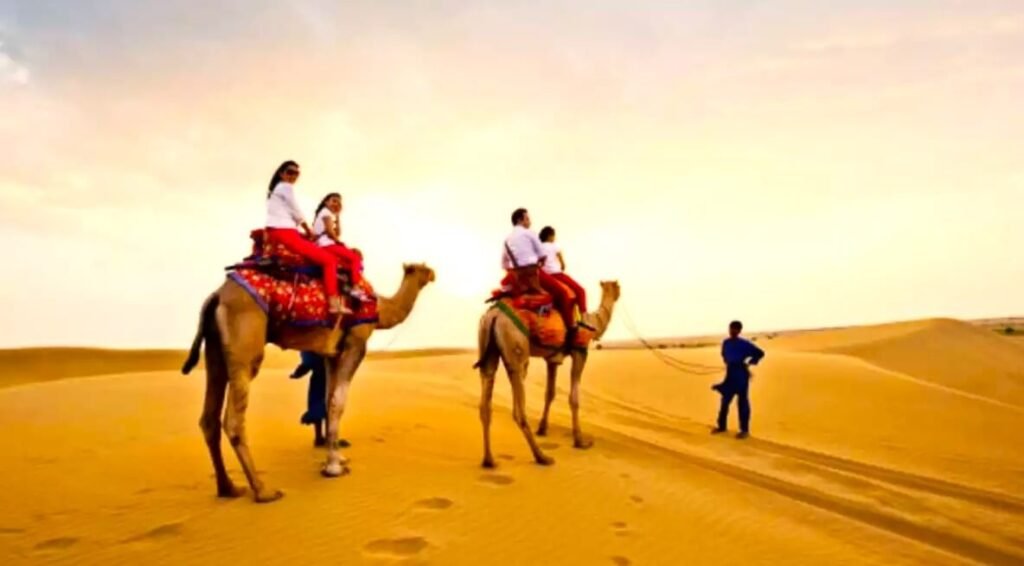
Evening: Sunset at Sam Sand Dunes No trip to Jaisalmer is complete without the Sam Sand Dunes. Arrive by late afternoon to enjoy a camel safari or a more adventurous jeep safari across the rolling dunes. As the sun begins to set, the sands turn a deep crimson, creating one of the most photographed sights in India. Spend the night at a desert camp, enjoying folk music, Kalbelia dance performances, and a traditional meal under the canopy of a million stars.
Travel Tips for an Enhanced Experience
To make the most of your 2-day route, consider the timing of your visit. The best months are between October and March when the weather is pleasant enough for full-day exploration. Wear comfortable cotton clothing, carry a scarf to protect against the sun and sand, and always keep a bottle of water handy. Respecting the local heritage by not littering at the monuments ensures these wonders remain preserved for future generations.
Jaisalmer is more than a destination; it is an emotion etched in stone. By following this route, you witness the perfect blend of historical resilience and natural beauty. Whether you are standing on the ramparts of the fort or sitting on a silent dune in Kuldhara, the Golden City promises memories that will linger long after the desert sand has been brushed off your shoes.